TL;DR
- The right privacy hedge for a Southwest Ranches property comes down to three factors: fast growth, HOA approval, and resistance to pests like whitefly.
- Ficus hedges, once the go-to choice across South Florida, are now restricted in many local HOAs because whitefly infestations spread quickly between neighboring yards.
- Species such as Clusia and Podocarpus deliver the same dense screening without that risk, and proper spacing gets you full coverage in one to two growing seasons.
Southwest Ranches is one of the few communities left in Broward County where a homeowner can still buy real acreage, and with that acreage comes a different kind of privacy problem than you'd find in a typical Davie subdivision. Wide lots, equestrian zoning, and neighboring properties that sit further apart still don't stop sightlines from open pastures, roadways, or a new build going up next door. Choosing the right privacy hedge installer Southwest Ranches homeowners can trust starts with understanding that the old default, the Ficus hedge, has fallen out of favor for a reason that has nothing to do with looks and everything to do with pests and HOA rules. This guide walks through what's replacing it, how to confirm your choice is compliant, and what it actually costs to get a solid line of privacy in the ground.
Why Are Ficus Hedges Restricted in Many Southwest Ranches HOAs?
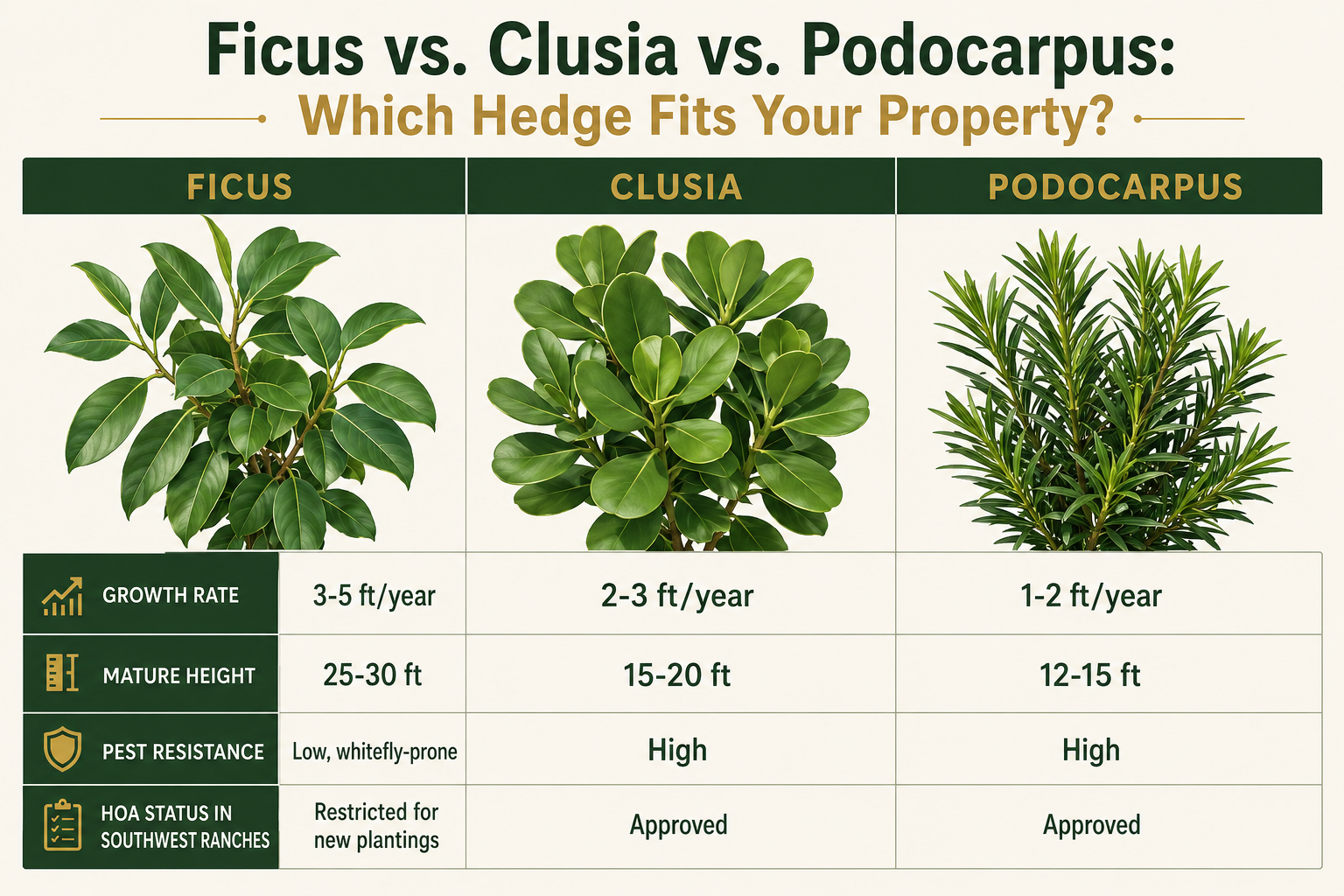
Ficus hedges are highly vulnerable to whitefly infestations, and because whitefly spreads easily from yard to yard, many Southwest Ranches and Davie HOAs now prohibit new Ficus plantings altogether. The insect problem became so widespread over the last decade that entire hedge lines had to be torn out and replaced at the homeowner's expense, which is exactly the outcome most communities are now trying to prevent.
The issue isn't that Ficus grows poorly. It's actually one of the fastest, densest options available, which is why it became the standard hedge across South Florida in the first place. The problem is that a single infested Ficus hedge can seed whitefly across an entire block within a season, and HOAs got tired of managing the fallout.
If your property already has an established Ficus hedge, most associations will let it stay as long as it's healthy. New plantings and full replacements are where the restrictions kick in, and that's where homeowners get caught off guard.
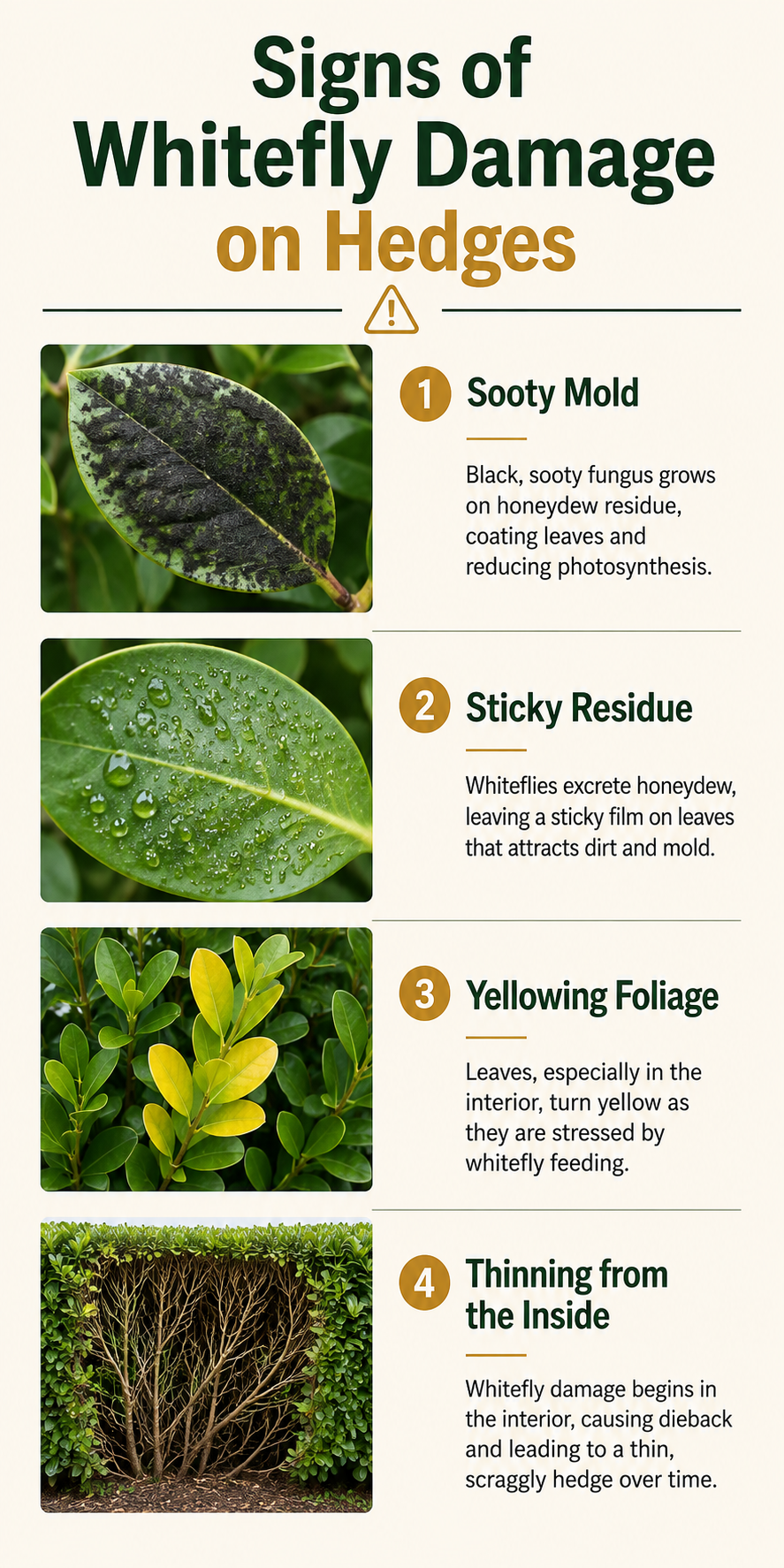
What Whitefly Damage Looks Like
Early signs include a black, sooty coating on the leaves, sticky residue on nearby patio furniture or cars, and yellowing foliage that thins out from the inside of the hedge. By the time the damage is visible from the street, the infestation has usually been active for months.
What Are the Best Non-Invasive, Fast-Growing Hedge Alternatives?
Clusia, Podocarpus, and Green Buttonwood are the three species we recommend most often to Southwest Ranches homeowners, and each one matches Ficus for privacy coverage without the whitefly vulnerability or the invasive root systems that can crack pool decks and driveways. Clusia in particular has become the community standard for HOA-approved replacement plantings across Broward County.
Clusia is the closest match to Ficus in terms of density and growth speed, with thick, waxy leaves that hold up well against South Florida humidity and salt air near the coast. Podocarpus grows a bit slower but forms a tighter, more formal hedge line that some homeowners prefer for front-of-property screening. Green Buttonwood offers a softer, more natural look and tolerates both wet and dry conditions better than most alternatives.
None of these three are considered invasive species in Florida, which matters both for HOA compliance and for protecting your home's foundation, pool structure, and irrigation lines over the long run. Our in-house planting crew handles our privacy hedge installation services from species selection through final grading, so the hedge is matched to your specific soil and sun exposure before anything goes in the ground.
Comparing Growth Rate and Mature Height
Clusia typically grows 2 to 3 feet per year and reaches a mature height of 15 to 20 feet if left unpruned, though most homeowners maintain it at 8 to 10 feet for screening. Podocarpus grows closer to 1 to 2 feet per year with a mature height around 15 feet. Green Buttonwood falls in between, with growth influenced heavily by irrigation and soil quality.
How Do You Confirm a Hedge Species Is HOA-Approved Before Planting?
Confirming HOA approval means checking your community's landscaping guidelines directly, or working with an installer who already knows the restrictions specific to your neighborhood. Southwest Ranches HOAs vary block by block, and what's approved in one community can still require a variance in another.
Most associations publish an approved plant list, but it's not always current, and Ficus restrictions in particular have been updated multiple times over the past several years as whitefly problems evolved. Calling your HOA office directly, or having your landscaper do it on your behalf, saves you from planting something that has to come back out. For a closer look at which hedge species are still HOA-approved across the most common local associations, we've broken down the current status community by community.
Getting written confirmation before installation, even a short email from the HOA office, protects you if the guidelines change again down the line.
How Far Apart Should Hedge Plants Be Spaced for Full Privacy Coverage?
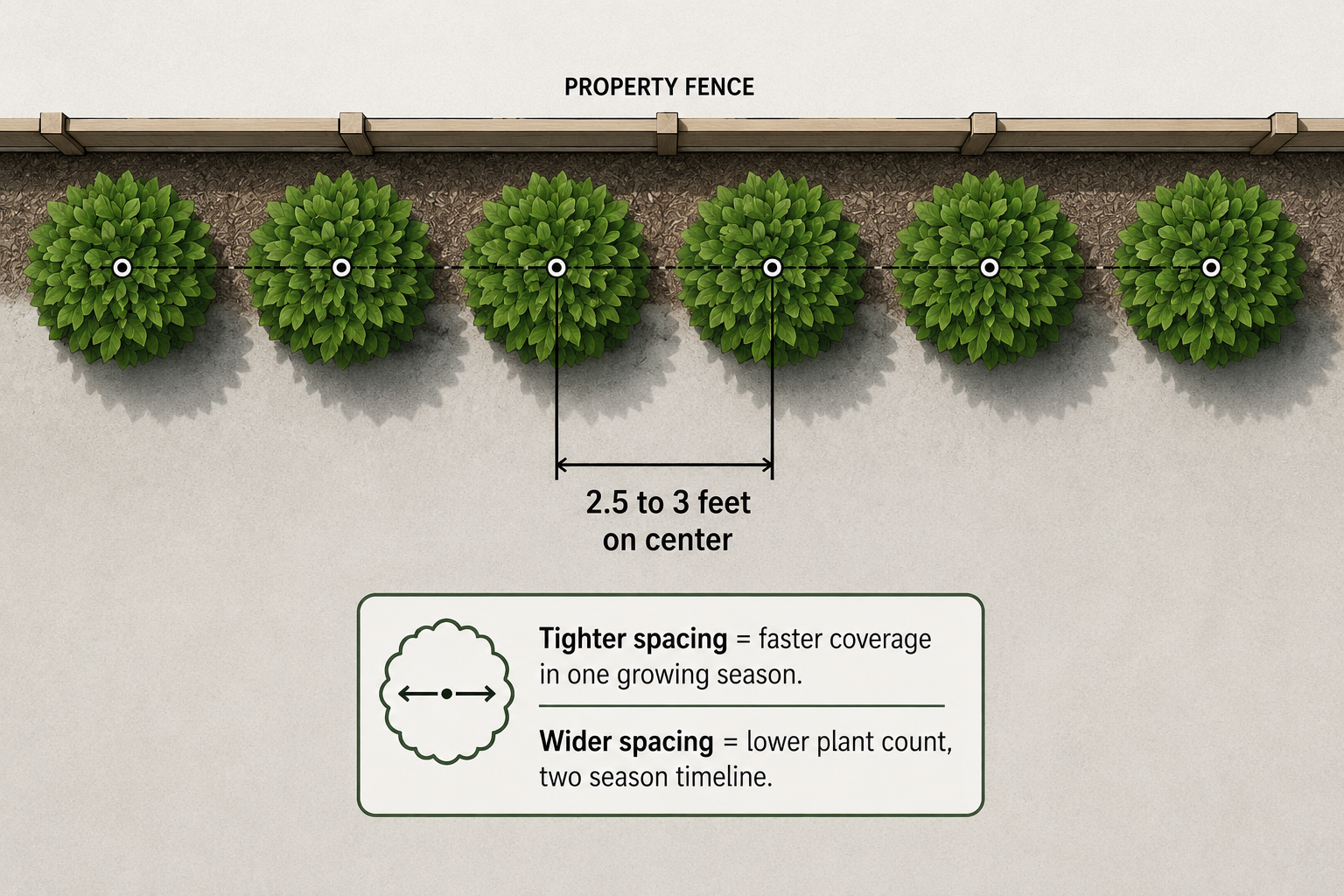
Most privacy hedges in Southwest Ranches are planted 2 to 4 feet apart, with the exact spacing depending on the mature width of the species chosen. Tighter spacing fills in faster but costs more upfront, since it requires more plants per linear foot.
Clusia and Podocarpus both spread to roughly 4 to 6 feet wide at maturity, so plants set 2.5 to 3 feet apart on center typically close into a solid screen within one full growing season, sometimes sooner with semi-mature stock. Wider spacing, closer to 4 feet, stretches that timeline to two seasons but reduces the total plant count and the installation cost.
Property boundaries and existing irrigation zones also factor into spacing decisions, particularly on Southwest Ranches lots where hedges often run along fence lines shared with equestrian trails or drainage easements. A site walk before planting catches these issues before they turn into a redo.
Are Privacy Hedges Safe for Pets and Children?
Clusia, Podocarpus, and Green Buttonwood are all considered non-toxic and safe around pets and children, making them a solid choice for Southwest Ranches families with dogs, horses, or young kids who use the yard regularly. That said, it's still worth confirming plant safety before installation if your property has grazing animals or a pet with a habit of chewing on landscaping.
Ficus, by comparison, can cause mild skin or digestive irritation in some pets, which is one more reason families with active outdoor pets have been moving toward the alternatives covered above. None of the recommended species carry thorns or irritant sap, which also makes maintenance and pruning safer for whoever's doing the trimming.
What Does Professional Hedge Installation Cost in Southwest Ranches?
Hedge installation cost in Southwest Ranches depends primarily on hedge length, the maturity of the plants at installation, and the species selected, with larger established plants costing more per unit but delivering privacy months faster than smaller starter stock. Homeowners planting a full property line should expect a wider cost range than those filling a single side yard.
Semi-mature Clusia or Podocarpus, typically planted at 4 to 6 feet in height, gives most Southwest Ranches properties visible privacy within the first season. Starting with smaller 2 to 3 foot plants costs less per unit but stretches the timeline to full coverage, which matters if you're trying to screen a new neighbor or an unwanted view before an event or season change. A detailed quote depends on your specific footage and site conditions, which is why we walk every property in person before pricing.
Frequently Asked Questions About Privacy Hedges in Southwest Ranches
Are Ficus hedges banned in Davie and Southwest Ranches?
Many HOAs in Davie and Southwest Ranches now restrict new Ficus plantings due to recurring whitefly infestations that spread between properties. Existing hedges are often grandfathered in, but replacements typically must use an approved alternative species.
What's a good fast-growing, non-invasive hedge for South Florida privacy?
Clusia and Podocarpus are two of the most reliable options. Both grow quickly, resist common pests, and don't have the invasive root systems associated with some older hedge varieties.
How long does it take for a privacy hedge to reach full height?
With properly spaced, semi-mature plants, most hedges reach effective privacy screening within one to two growing seasons, though full mature height can take three to five years depending on species.
Do privacy hedges need a lot of irrigation in Florida?
Newly planted hedges need consistent watering for the first several months to establish roots. Once established, most recommended species are drought-tolerant and require minimal supplemental irrigation.
Matt Patella's Perspective
"I've had more than a few clients come to me after their Ficus hedge got flagged by their HOA for whitefly. It's an expensive mistake to avoid. Picking the right species up front saves homeowners from ripping everything out and starting over two years later."
- Matt Patella , 11 years in practice, The Time Is Now Design and Build
Ready to Plan Your Privacy Hedge in Southwest Ranches?
The homeowners who avoid an HOA headache are the ones who get species selection right before anything goes in the ground. Skipping that step is what leads to a hedge that looks great for two years and then has to come out entirely.
The Time Is Now Design and Build has spent 11 years installing landscaping across Southwest Ranches, Davie, and Weston, with an in-house planting crew that handles every step from soil prep to final placement. We know which species clear HOA review in which communities, and we build the plan around your property's sun, soil, and sightlines rather than a one-size-fits-all list.
Get Your Free Landscape Consultation and we'll walk your property, confirm what your HOA allows, and put together a plan that gets you real privacy without the risk of a costly replant.
Choosing the right privacy hedge in Southwest Ranches isn't complicated once you know which species actually hold up here. Clusia, Podocarpus, and Green Buttonwood give you the density Ficus used to offer, without the whitefly risk or the HOA pushback. A property matched to the right hedge from day one is a property that stays private for years, not just until the next infestation sweeps through the neighborhood.