TL;DR: Not always. A properly compacted gravel and sand base supports porcelain pavers in most standard residential patios, but a concrete slab is often the better choice for high-traffic areas, structures like pergolas, or sites with unstable soil.
If you're planning a porcelain paver patio in Davie or anywhere else across South Florida, the base question comes up early, and for good reason. Our sandy soil behaves differently than the clay or loam bases used up north, and the wrong foundation choice can lead to shifting, cracking, or uneven pavers within a few seasons. The good news is that porcelain pavers don't automatically require a poured concrete slab.
When Is a Gravel Base Sufficient?
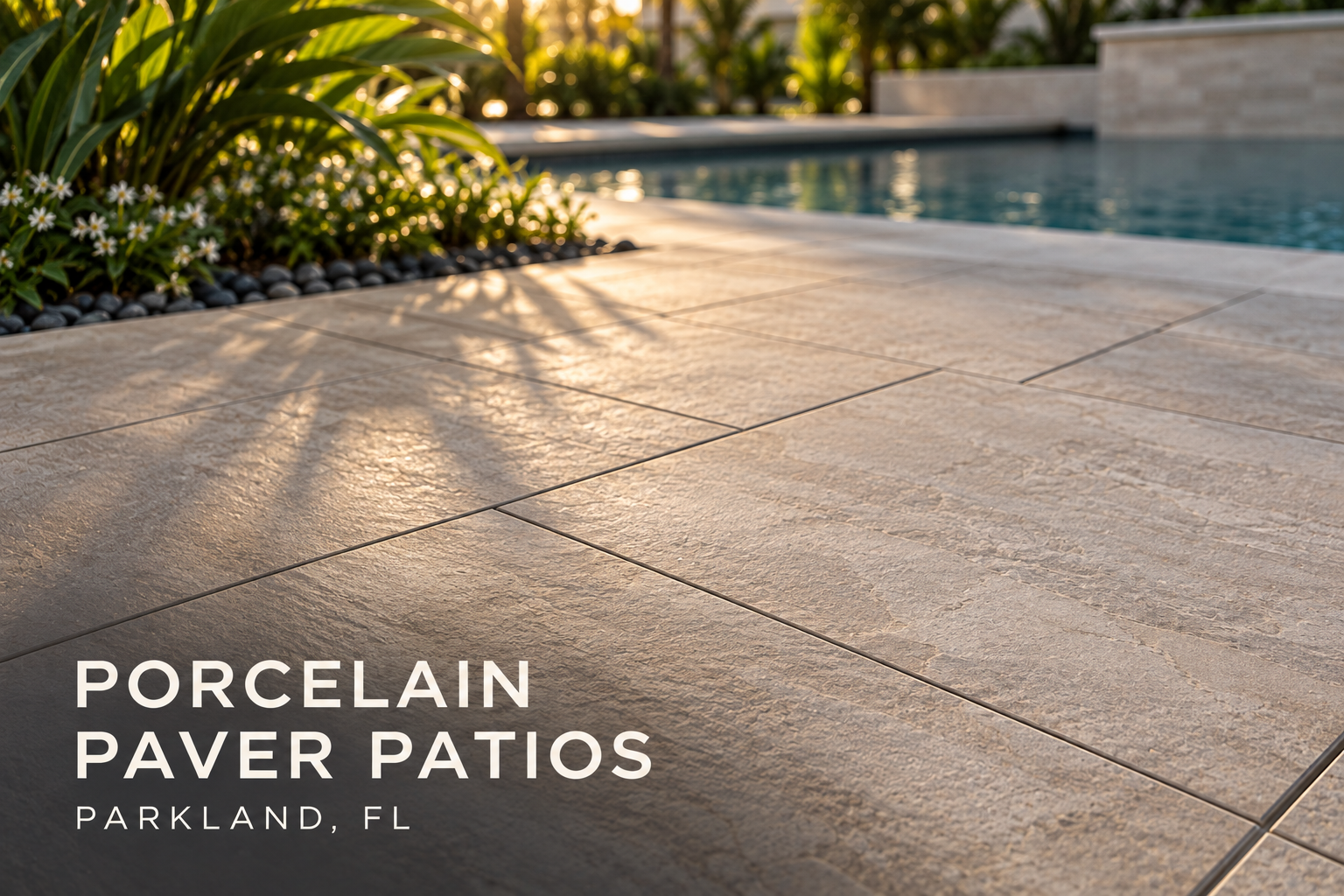
A properly compacted gravel and sand base is often sufficient for standard residential patio areas with stable soil conditions. This is the most common installation method for porcelain paver patios in South Florida, and when it's done correctly, it holds up well against heat, humidity, and heavy rain.
The process involves excavating the area, laying a compacted gravel base of several inches, adding a leveling layer of sand, then setting the pavers with proper joint spacing. Compaction is the part that matters most. Skip a step here and the base settles unevenly, which shows up later as lippage or shifting pavers, even on a beautiful patio design.
For a standalone patio space not attached to a structure, sitting on soil that drains well, a gravel base is usually the right call. It's less invasive, costs less than a full slab, and still delivers a durable, long-lasting surface when the compaction work is done properly the first time.
When Should You Use a Concrete Slab Instead?
A concrete slab is typically recommended for high-traffic areas, spaces integrating with structures like pergolas, or sites with less stable soil. Slabs give you a rigid, unmoving foundation, which matters when the patio needs to support additional weight or tie directly into a covered structure.
Properties with looser fill soil, low-lying drainage issues, or areas near a pool deck often benefit from a slab base as well. If your patio is going to see constant foot traffic, outdoor furniture that stays in one place for years, or a built-in kitchen or fire feature, a slab provides the added stability those features need over time.
The right answer really depends on your specific property. Soil composition can vary from one Broward County lot to the next, which is why a site walk-through matters more than a generic rule of thumb. Our full patio installation guide breaks down the full process in more detail, including how drainage and structure placement factor into the decision.
Quick Questions
Is a gravel base as durable as a concrete slab for a paver patio?
For most residential applications with proper compaction, a gravel base performs well. A concrete slab offers additional stability for higher-traffic areas or spaces structurally integrated with a pergola or outdoor kitchen.
How do you know which base type is right for your property?
A site assessment that looks at soil type, drainage, and how you plan to use the space determines the right base. A local installer can evaluate this during a consultation.
"South Florida sand needs the right compaction technique regardless of which base you choose. That's where most shortcuts show up later," says Matt Patella, who has spent 11 years building outdoor spaces across Broward County with The Time Is Now Design and Build.
Ready to Find Out What Your Patio Needs?
Every property is different, and the right base comes down to your soil, your layout, and how you plan to use the space. With 11 years in practice and a fully in-house crew, The Time Is Now Design and Build handles every step of the process, from the ground up. Get your free patio design consultation and find out what your Davie or Parkland property actually needs before the first paver goes down.