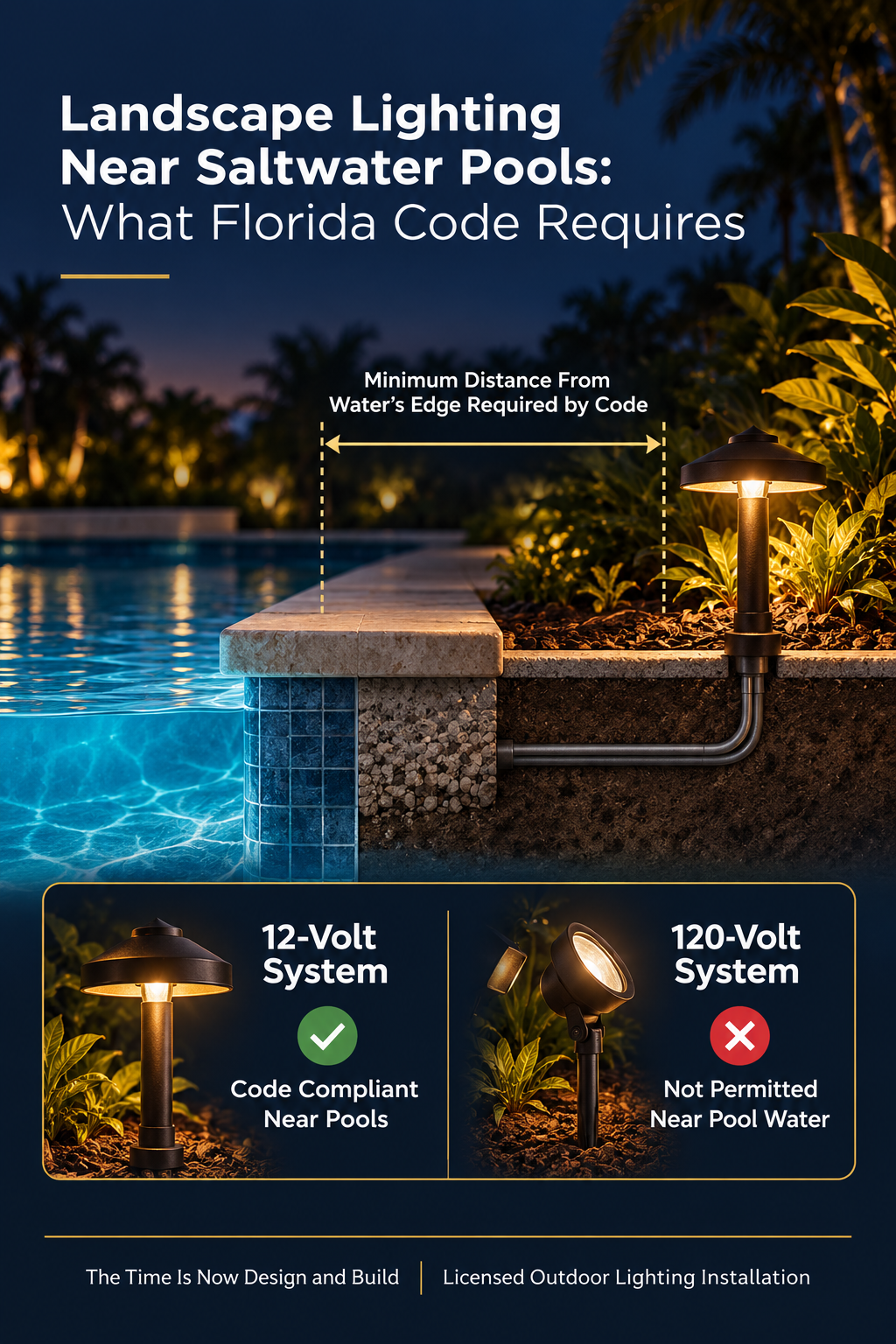
TL;DR: Low-voltage systems, typically 12-volt, are standard and required by code for landscape lighting installed near pools, including saltwater pools, along with minimum distance requirements from the water's edge.
Saltwater pools have become the standard for new builds across Broward County, and homeowners in Davie, Weston, and Boca Raton often assume the lighting rules are the same as any other outdoor fixture. Voltage landscape lighting near saltwater pools in Florida is governed by strict electrical code because water and standard household current create a real safety risk. Getting this wrong doesn't just risk a failed inspection. It puts anyone swimming after dark in danger.
Why Is Low Voltage Required Near Pools?
Low voltage significantly reduces electrical hazard risk in wet areas, which is why code requires it for fixtures near any pool, saltwater or chlorinated. Standard household wiring runs at 120 volts. A 12-volt system carries a fraction of that current, which is the difference between a fixture that's safe within reach of pool water and one that isn't.
This isn't a matter of preference or aesthetics. The National Electrical Code, adopted and enforced throughout Florida, sets voltage limits specifically for fixtures installed near swimming pools, spas, and fountains. Saltwater pools don't get an exception. If anything, the salt content makes the surrounding area more conductive, which is exactly why a licensed, code-informed installer should be handling any lighting design within reach of the water.
How Close Can Fixtures Be Installed to the Water?
Minimum distance requirements apply and vary based on fixture type and voltage, making a code-informed installer essential for pool-adjacent lighting. Most low-voltage fixtures still need to sit a set number of feet from the water's edge, and that distance changes depending on whether the fixture is submersible, wet-rated, or a standard landscape unit.
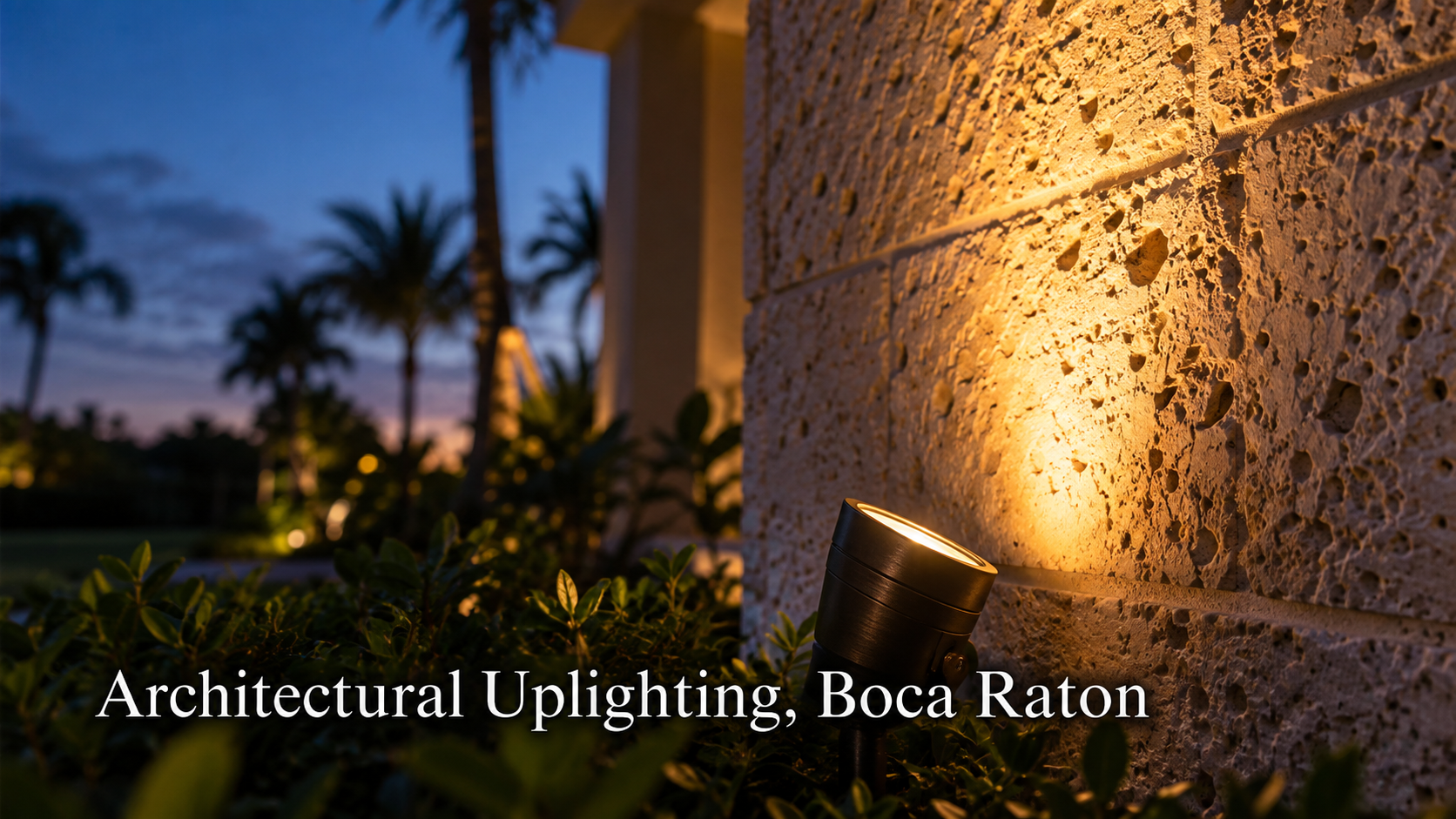
Homeowners often want uplighting close to the pool deck for a dramatic evening look, and that's achievable, but only when the fixture placement, voltage, and transformer location all meet code together. This is where a lot of DIY and unlicensed installations run into trouble. Getting the layout right the first time is part of what's covered in our full landscape lighting design guide, which walks through fixture placement for pool-adjacent properties in more detail.
Quick Questions
Can standard 120-volt landscape lighting be used near a pool?
No. Code requires low-voltage (typically 12-volt) systems near pools due to the significantly higher electrical hazard risk of standard household voltage in wet areas.
Does saltwater require different lighting code than a chlorine pool?
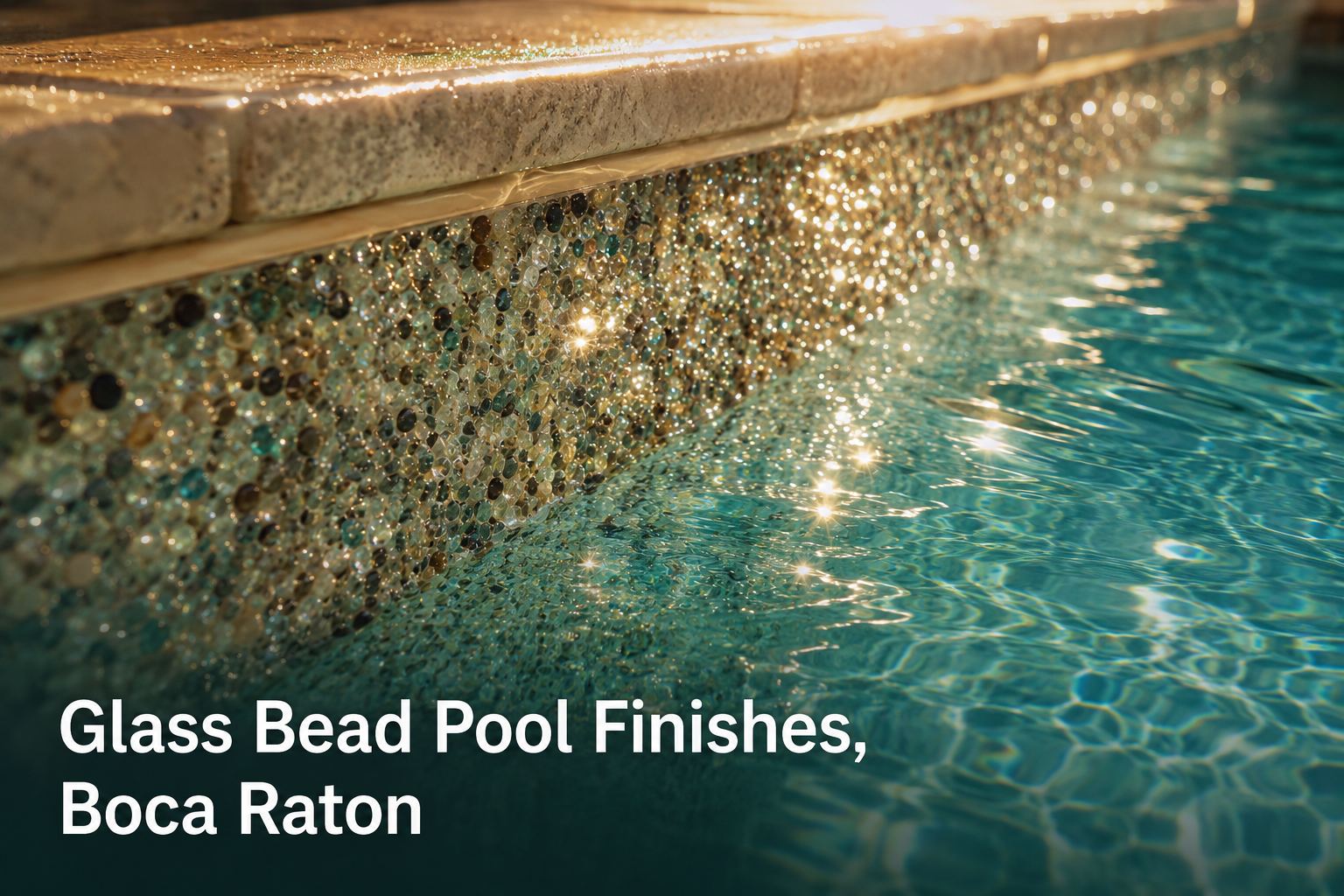
The core voltage and distance requirements are similar for both pool types, though saltwater's corrosive nature makes fixture material selection an additional consideration.
"Voltage compliance near a pool isn't optional. It's a safety code, and it's one of the first things we check on a lighting design near water," says Matt Patella, who has spent 11 years building outdoor spaces across Davie and the surrounding communities at The Time Is Now Design and Build.
Ready for a Code-Compliant Lighting Design?
Voltage and fixture placement near a saltwater pool aren't the kind of details to guess on. The Time Is Now Design and Build brings 11 years of in-house experience designing and installing pool-adjacent lighting throughout Broward County and Southern Palm Beach County, with every fixture placed to meet code from the start.
If you're planning lighting near a pool, spa, or water feature, schedule your free lighting design consultation and get a layout built around your property, your pool, and the requirements that come with it.