TL;DR: Yes. Motorized louvered pergolas typically require both a structural building permit and a separate electrical permit in Broward County, since the motor and controls involve wired electrical components.
Homeowners across Davie, Weston, and Boca Raton are adding motorized louvered pergolas to their backyards for the control they offer over sun, rain, and shade. But before the motor gets wired in, Broward County requires more paperwork than a standard fixed pergola. Getting the motorized pergola electrical permit sorted upfront keeps your project on schedule and protects you down the road, whether that's during a home sale, an insurance claim, or a routine code inspection.
Why Is an Electrical Permit Required?
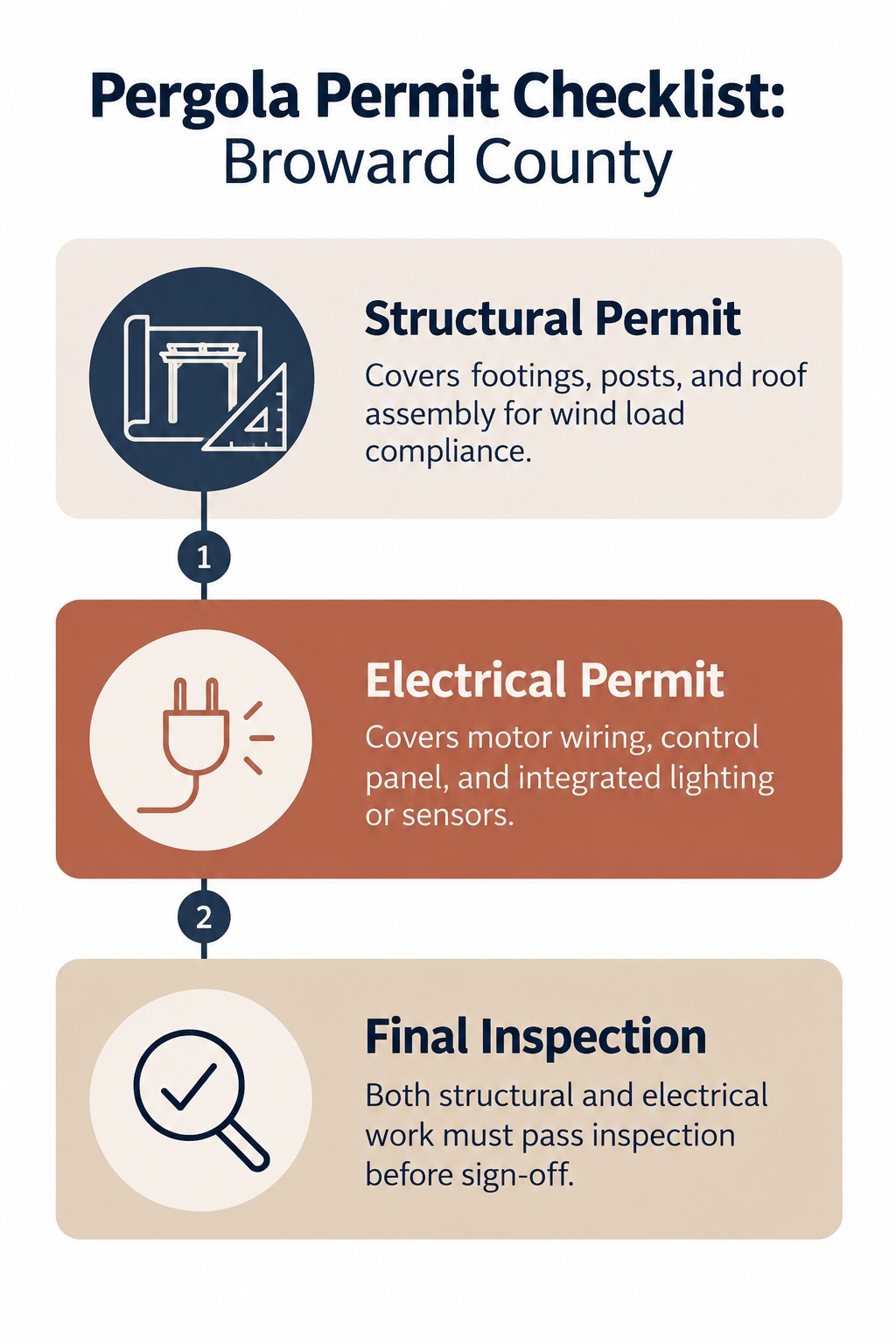
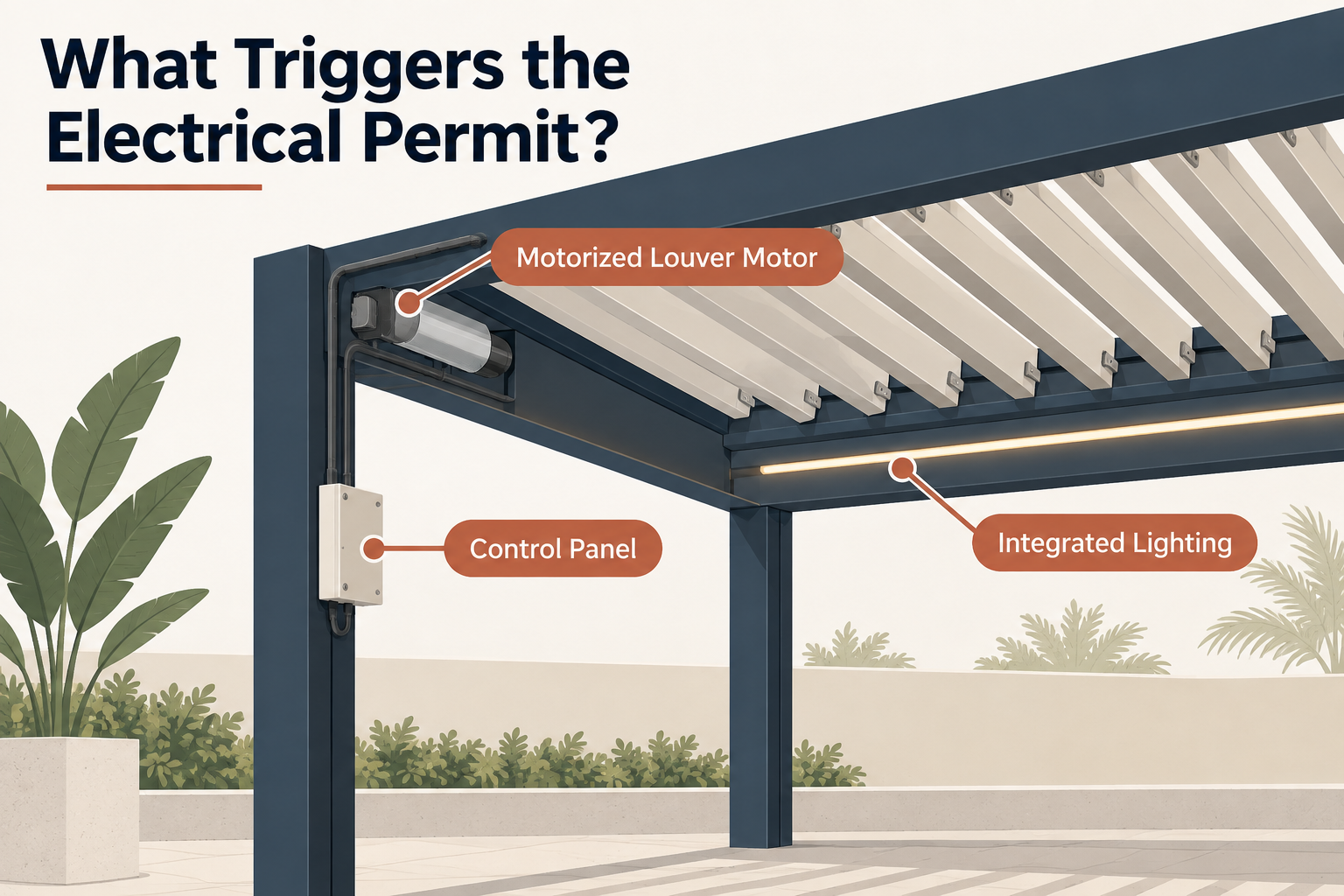
An electrical permit is required because the motor, control panel, and any integrated lighting or rain sensors involve wired electrical work, which falls under Broward County's standard electrical permitting requirements. A fixed, non-motorized pergola typically only needs a structural permit. Once you add motorization, the project crosses into electrical work, and that changes the permit requirements.
The structural permit covers the pergola's footing, posts, and roof assembly, confirming it can withstand South Florida's wind loads. The electrical permit covers the wiring that powers the louvers, the connection to your home's electrical panel, and any low-voltage lighting or weather sensors built into the system. Both permits usually require separate inspections before the project is signed off.
For homeowners weighing a louvered roof for their outdoor living space, the complete louvered pergola permitting guide breaks down the full approval process, from structural drawings to final electrical sign-off, specific to Broward County.
What Happens If You Skip the Permit?
Skipping the electrical permit can create real problems with home insurance claims, future home sales, and code enforcement if the work is discovered later. Unpermitted electrical additions are one of the more common issues that surface during a home inspection or appraisal.
If a wiring issue ever causes damage, an insurer can deny a claim tied to unpermitted work. Selling the home later can also get complicated, since buyers' inspectors and title companies routinely flag unpermitted electrical additions. Broward County code enforcement can require the work to be opened up and re-inspected, which costs far more than pulling the permit correctly the first time.
"Skipping the electrical permit is one of the most common shortcuts we see, and it's the one that causes the biggest headaches later," says Matt Patella, who has spent 11 years building outdoor structures across Broward County with The Time Is Now Design and Build.
Quick Questions
Who is responsible for pulling the permits, the homeowner or the contractor?
A licensed contractor typically pulls both the structural and electrical permits as part of the installation process. Homeowners should confirm this is included in writing before signing a contract, since responsibility can vary by company.
How long does permit approval typically take in Broward County?
Timelines vary depending on the jurisdiction and project scope, but homeowners should generally expect a review and approval period before installation can begin. A local contractor familiar with the process can often help streamline the timeline.
Ready to Add a Motorized Louvered Pergola?
Permit handling should never be an afterthought on a project like this. The Time Is Now Design and Build manages structural and electrical permitting in-house for every motorized louvered pergola installed across Broward County and Southern Palm Beach County, backed by 11 years of local building experience.
Request your free pergola consultation to get a clear scope of the permitting process, the timeline, and what a motorized louvered pergola would look like for your backyard.