TL;DR
- A motorized louvered pergola gives homeowners push-button control over shade, airflow, and rain protection.
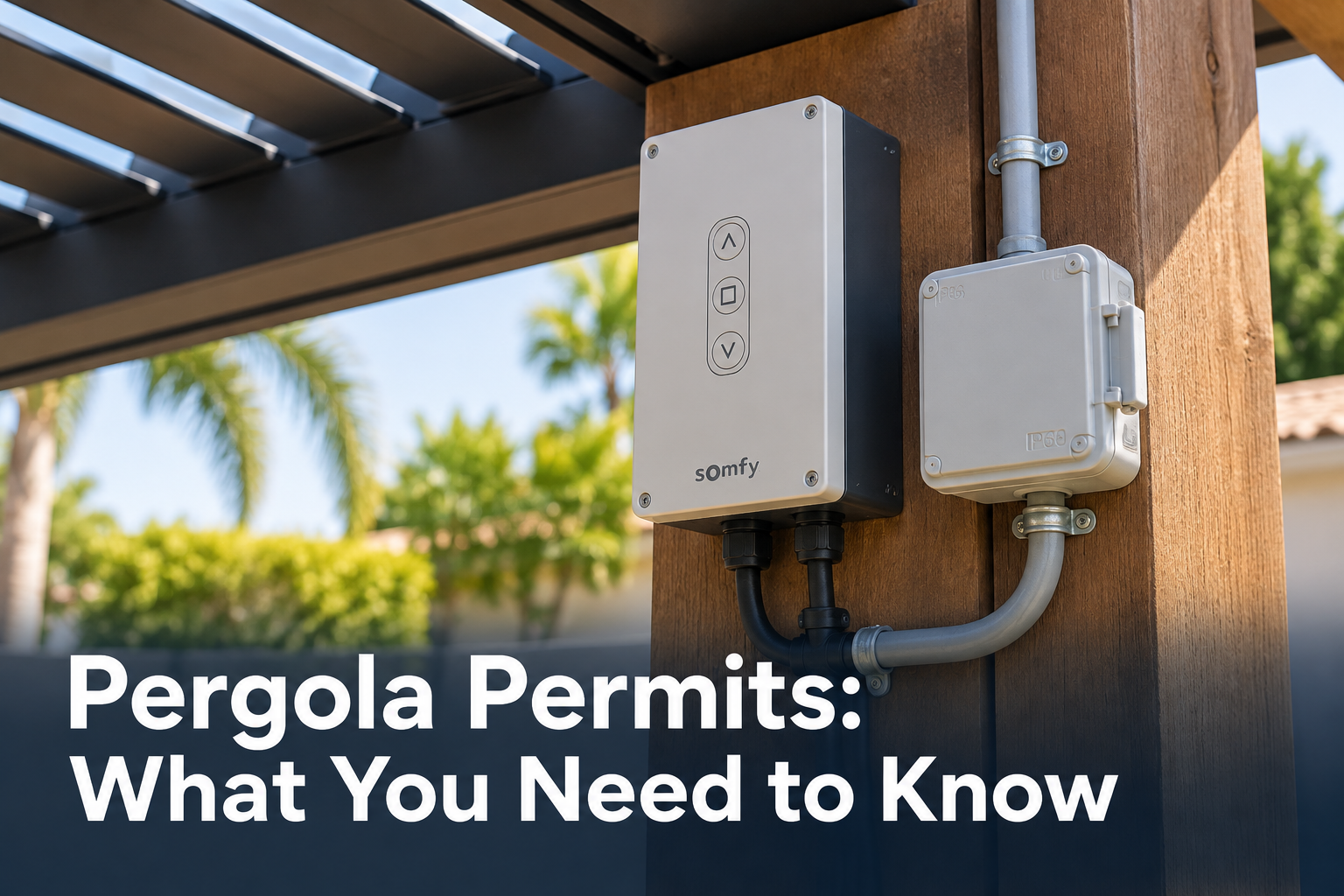
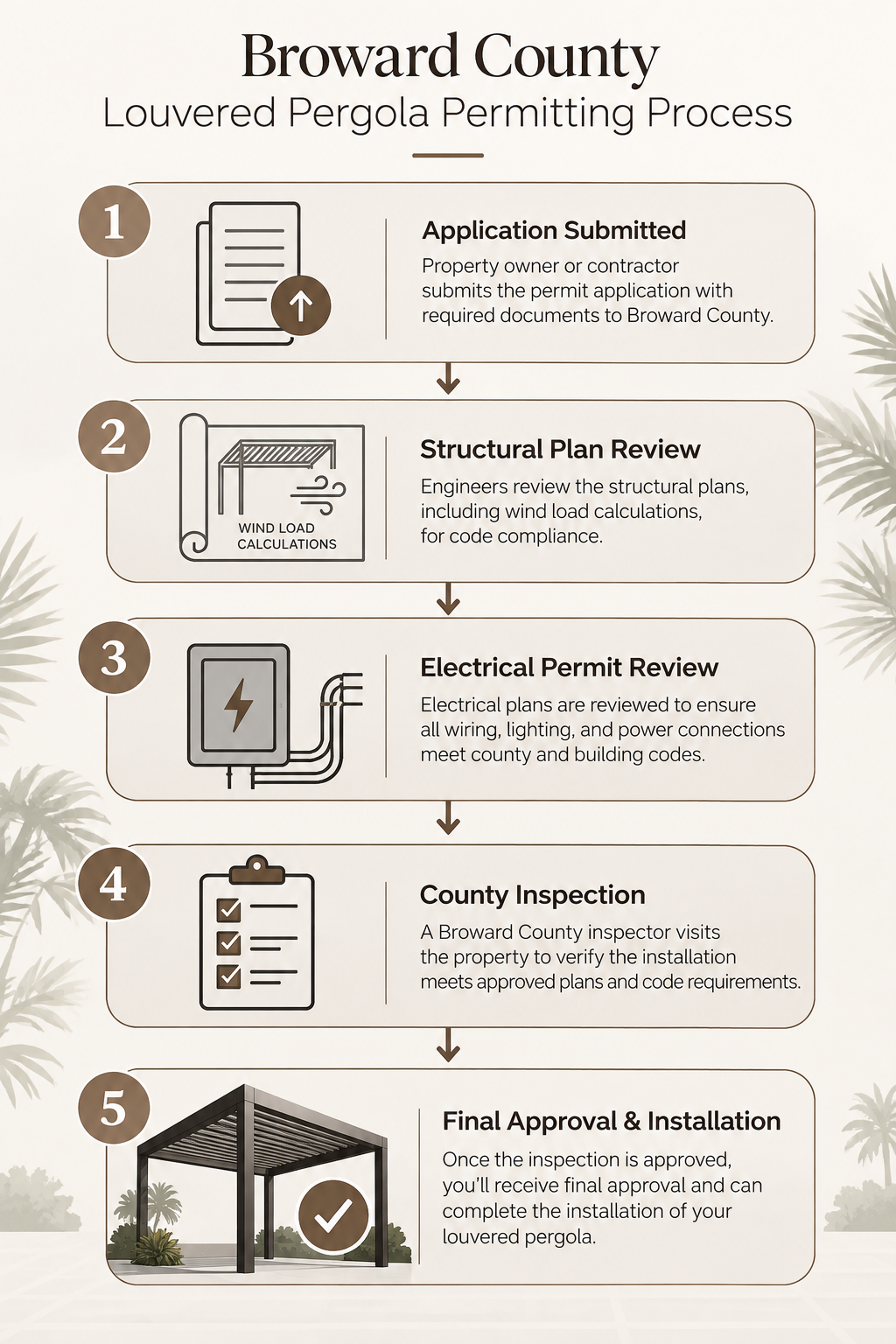
- Installation in Boca Raton requires both a structural permit and an electrical permit because of the wind load requirements and motorized components involved.
- A licensed local installer handles the engineering, permitting, and electrical work from start to finish, so the process stays smooth from quote to final inspection.
If you spend any part of the year on your patio in Boca Raton, you already know the tradeoff. Full sun by ten in the morning, sudden rain by two in the afternoon, and a fixed pergola that can't do a thing about either one. A motorized louvered pergola solves that problem by putting the roof under your control. Homeowners comparing a motorized louvered roof installer in Boca Raton usually land here after realizing a stationary structure just doesn't keep up with South Florida weather.
This guide walks through what actually goes into a louvered pergola installation here, from permitting to anchoring to what it costs, so you know what to expect before you sign a contract. Our motorized louvered pergola systems are built and installed in-house, which matters more than most homeowners realize once permitting enters the picture.
What Is a Motorized Louvered Pergola, and How Does It Work?
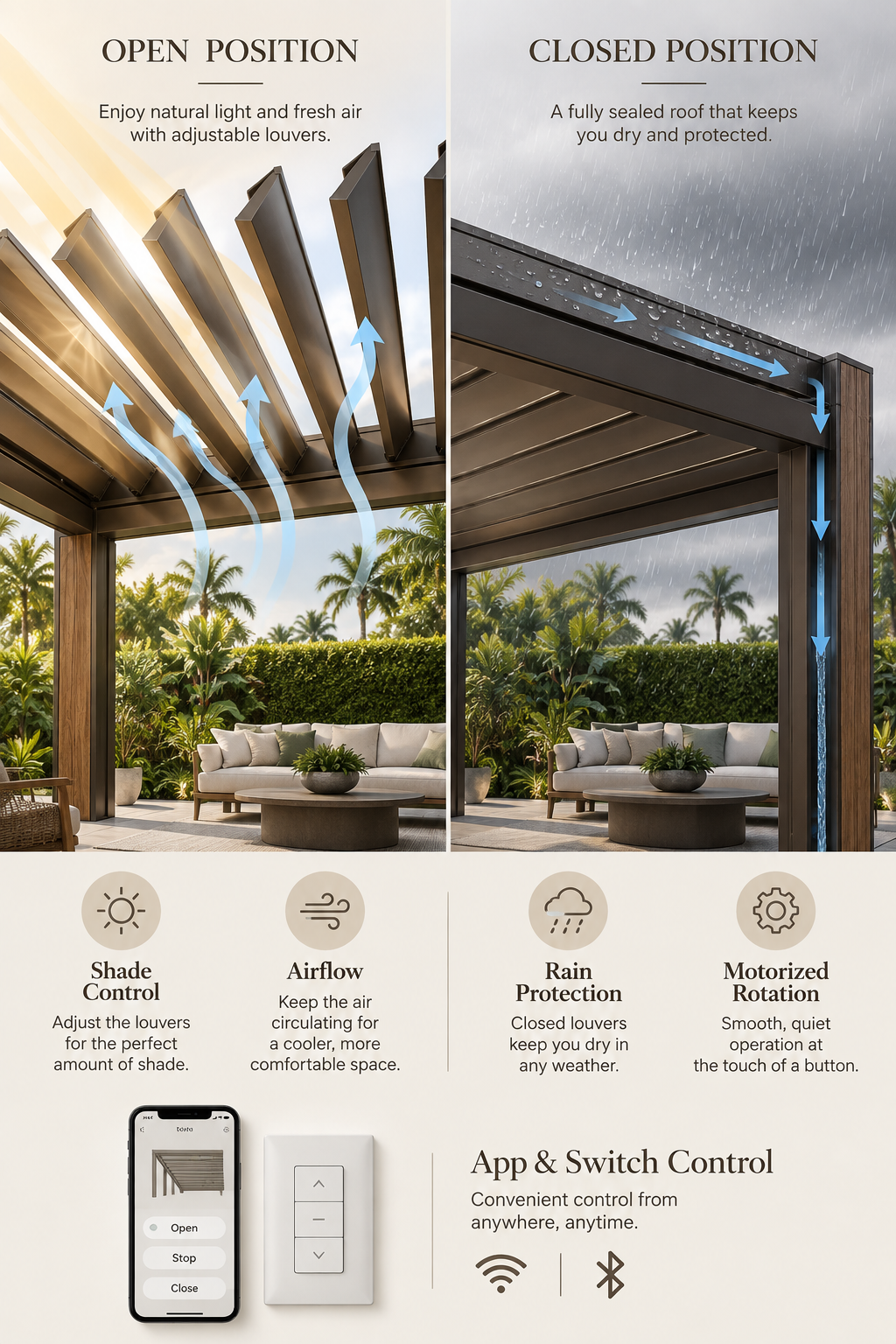
A motorized louvered pergola uses rotating aluminum louvers controlled by an electric motor, letting you adjust shade and airflow or close the roof completely when rain starts. Most systems run on a wall-mounted switch or a smartphone app, and higher-end setups add a rain sensor that closes the louvers automatically the moment it detects moisture.
The louvers themselves are engineered aluminum blades, not the wood or vinyl slats you'd see on a fixed pergola. Each blade rotates roughly 135 to 170 degrees depending on the manufacturer, which means you get everything from full open sky to a fully sealed roof from the same structure. That range is the entire appeal. One structure replaces what used to require a pergola for shade and a separate hard-roof patio cover for rain.
Manual vs. Motorized Systems
Manual louvered systems exist and cost less upfront, but they require a hand crank or pole to adjust, which gets old fast in a yard you actually want to relax in. Motorized systems add the electrical component, which is exactly why permitting looks different for the two. If budget is the deciding factor, a manual system is worth a look. If daily convenience matters more, motorized is where most Boca Raton homeowners end up.
Do You Need a Permit to Install a Motorized Louvered Pergola in Broward County?
Yes. Most louvered pergola installations require both a structural building permit and a separate electrical permit, because the structure has to meet wind load requirements and the motor has to be wired to code. Skipping either one isn't a shortcut. It's a liability that shows up later at resale, during an insurance claim, or when a county inspector notices unpermitted work on a future project.
What the Permitting Process Involves
The structural permit covers the footing, the anchoring method, and the engineering calculations that prove the pergola can withstand local wind load standards. The electrical permit covers the wiring for the motor, the control switch, and any integrated lighting or rain sensor. Broward County reviews both before issuing final approval, and a licensed contractor typically handles the submission, the plan review, and the inspection scheduling. For a full walkthrough of what each step looks like and how long it takes, the complete louvered pergola permitting guide breaks down the timeline in more detail.
How Is a Louvered Pergola Anchored and Engineered for Florida Wind Loads?
A properly engineered pergola is anchored to a reinforced footing or an existing concrete slab and rated to withstand South Florida's wind load requirements, which vary depending on the county, the structure's height, and its proximity to the coast. Boca Raton's proximity to the water means engineering calculations here tend to run more conservative than what you'd see further inland.
Anchoring typically happens one of two ways. New installations pour a dedicated footing sized to the structure's load requirements. Installations going over an existing patio use engineered base plates or core-drilled anchors tied into the slab below. Either method needs a licensed engineer's sign-off before the structural permit gets approved, which is part of why DIY louvered pergola kits create so many problems down the line. The hardware is only as good as what it's bolted to.
How Long Does Installation Take?
Most residential louvered pergola installations take one to three weeks from permit approval to final electrical inspection, depending on the size of the structure and the condition of the installation site. That timeline doesn't include the permitting window itself, which can add another two to four weeks depending on how busy the county's review office is at the time.
Larger installations, custom color finishes, or projects that involve tying into an existing outdoor kitchen or lighting system tend to run toward the longer end of that range. A straightforward installation over an existing paver patio, with standard sizing and a single control switch, usually moves faster.
What Does a Motorized Louvered Pergola Cost in Boca Raton?
Investment varies significantly based on size, motorization features, and how much integration work is needed with existing hardscape, so most quality installations reflect both the engineering behind them and the premium aluminum materials used. A basic manual system will always cost less than a fully motorized one with rain sensors and app control.
What Affects Pricing
Size is the biggest driver, since larger spans require heavier engineering and more louver panels. Beyond that, motorization level matters. A single switch-controlled system costs less than one with integrated rain sensing, wind sensors, and smart home connectivity. Site conditions play a role too. Installing over an existing patio with structurally sound pavers is typically more straightforward than a new build that requires fresh footings. The most accurate way to understand what a specific project will run is a detailed, itemized quote based on your actual yard, not a generic price range pulled from a website.
Can a Louvered Pergola Be Installed Over an Existing Patio?
Yes, in most cases a louvered pergola can be anchored directly to an existing paver or concrete patio, provided the surface is assessed for structural adequacy first. Not every existing patio can support the load without reinforcement, which is why that assessment happens before any contract gets signed.
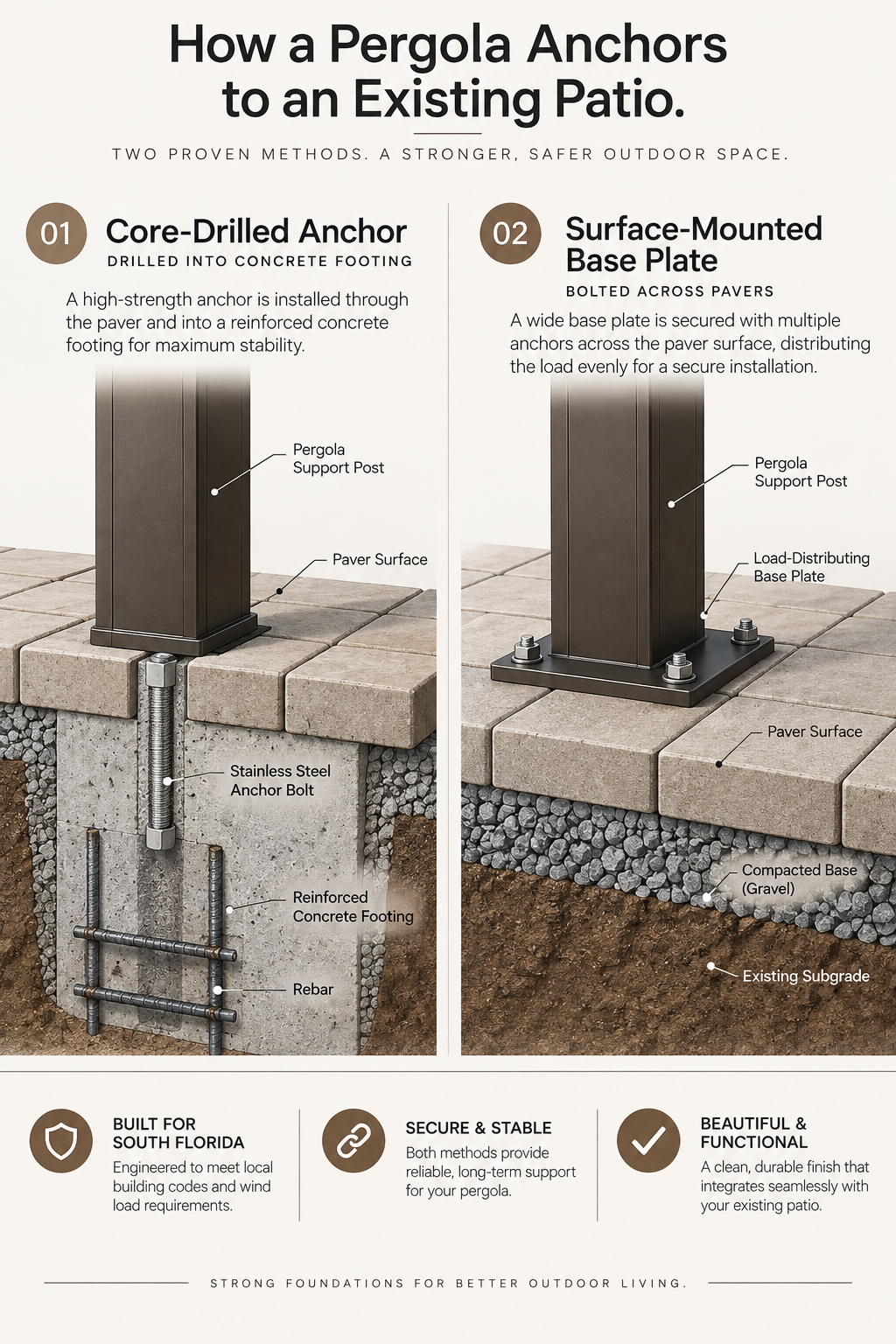
Anchoring over pavers typically involves either core-drilling through the pavers into a reinforced footing below, or installing an engineered surface-mounted base plate system that spreads the structural load without cracking individual pavers. Both methods are common in Boca Raton and Delray Beach, where mature landscaping and established hardscape often mean homeowners want to add a pergola without tearing out a patio they already like.
Frequently Asked Questions About Motorized Louvered Pergolas
Do motorized louvered pergolas require an electrical permit in Broward County?
Yes. Because motorized louvered pergolas run on electric motors, Broward County typically requires both a structural permit and a separate electrical permit, both of which should be pulled by a licensed contractor before installation begins.
Can a louvered pergola leak during heavy rain?
When properly installed and maintained, a quality louvered pergola system is engineered to shed water through the louver seams and integrated gutter channels. "Leaks almost always trace back to installation shortcuts or worn seals, not a flaw in the design itself," says Matt Patella. "We test every system under rain conditions before we consider a project finished."
How much does a custom motorized louvered pergola typically cost?
Pricing depends heavily on size, motorization level, and site-specific engineering needs. A detailed, itemized quote from a licensed local installer is the most accurate way to understand investment for your specific project.
Can a louvered pergola be anchored to a paver patio without damage?
Yes, with proper technique. Anchoring typically involves either core-drilling through pavers into a reinforced footing below or engineering a surface-mounted base plate system that distributes weight without cracking individual pavers. "This is one of the most common questions we get on-site," Matt Patella notes. "Most existing patios can handle it once we've checked the base."
Matt Patella's Perspective
"The permitting side of louvered pergolas trips a lot of homeowners up, especially when a quote from someone else doesn't include it. We pull both the structural and electrical permits as part of the process because skipping that step creates real problems down the line, with inspections, insurance, and resale." — Matt Patella, 11 years in practice, The Time Is Now Design and Build
Ready to Add a Louvered Pergola to Your Boca Raton Backyard?
A motorized louvered pergola works twelve months a year in South Florida, not just during the mild stretch of the calendar. That's what makes it a genuine outdoor living transformation rather than a seasonal add-on.
The Time Is Now Design and Build handles the full process in-house, including permit submission, structural engineering, and licensed electrical work, so there's no gap between the design phase and the installation crew. With 11 years in practice serving Boca Raton, Delray Beach, and Parkland, the team has already worked through the permitting quirks specific to each municipality.
Request your free pergola consultation, including a full permit scope review, before you commit to a design.
A motorized louvered pergola installed by an experienced local team means fewer surprises during permitting, a structure engineered for real wind conditions, and a Boca Raton outdoor space you can actually use in any weather. That combination of premium materials and proven expertise is what separates a pergola that lasts from one that becomes a problem in year two.