TL;DR: Quartz aggregate finishes give your pool a durable, lightly textured surface with a natural stone look. Glass bead finishes add reflective shimmer and a smoother feel underfoot. Both are premium options with similar longevity when properly installed.
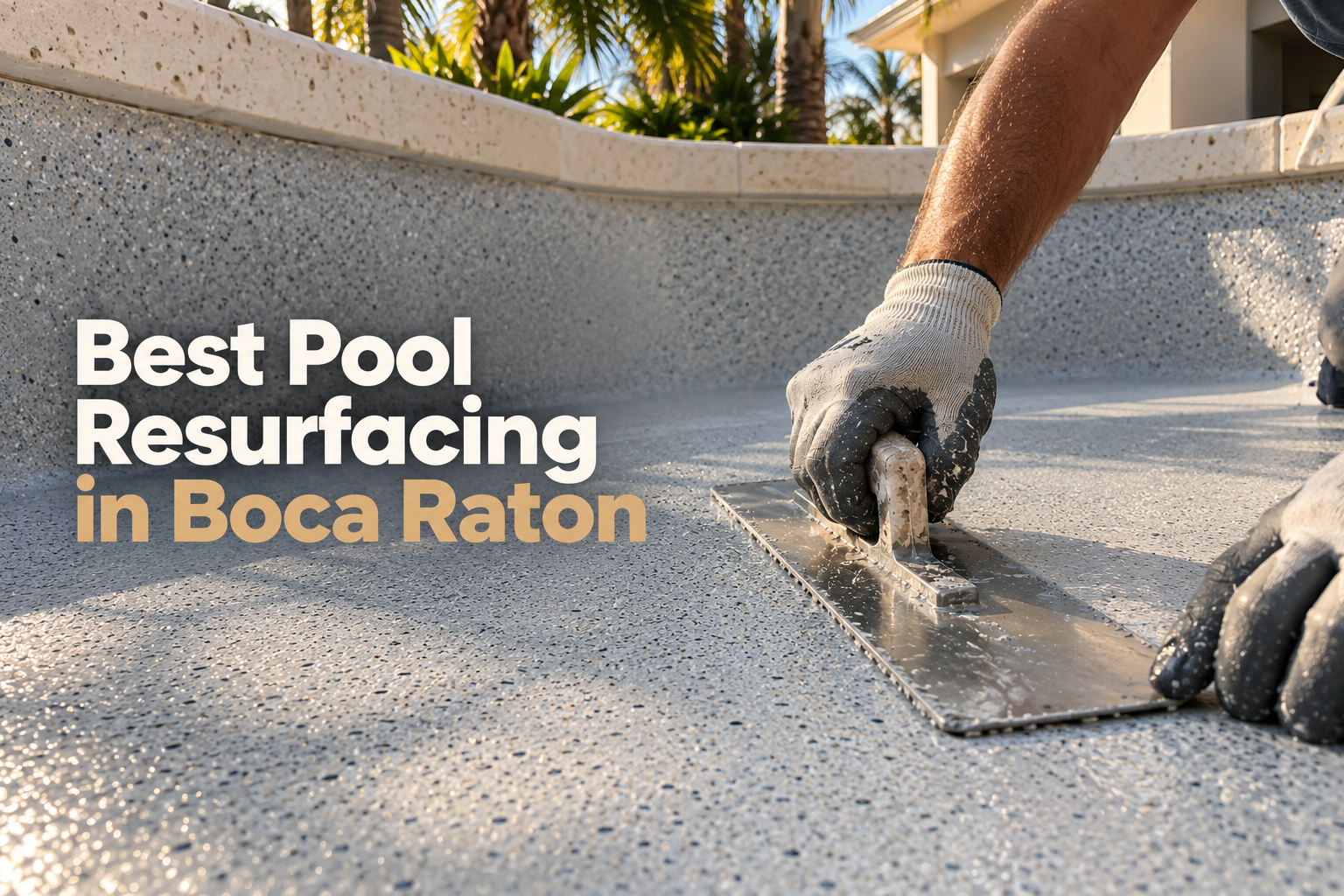
Choosing between a quartz aggregate vs glass bead pool finish is one of the final decisions in a pool resurfacing project, and it's the one you'll notice every time you step outside. In Boca Raton, Weston, and across Broward County, pools see year-round use under intense sun. The finish you choose shapes how the water looks at midday, how it feels on bare feet, and how it holds up season after season. Here's how the two compare.
How Do Quartz and Glass Bead Finishes Differ in Appearance?
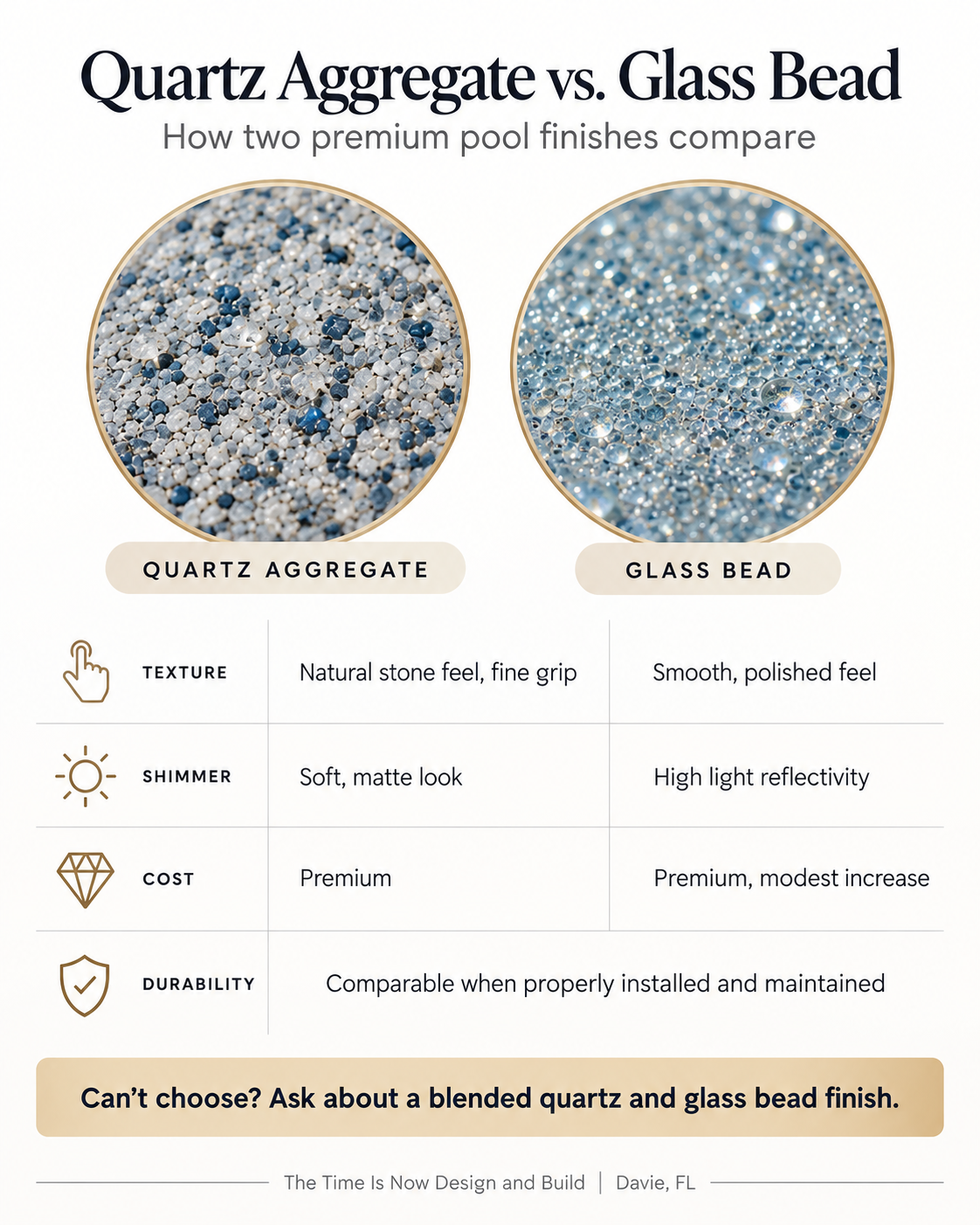
Quartz aggregate has a natural, stone-like texture with soft color variation. Glass bead finishes have a smoother surface with a subtle shimmer from reflected light.
Quartz finishes blend colored quartz crystals into a white cement base. The result is a matte, speckled surface that reads as natural stone, and it pairs beautifully with travertine decking and tropical plantings. Colors range from soft whites to deep blues and grays, which shift the water from pale turquoise to a richer lagoon tone.
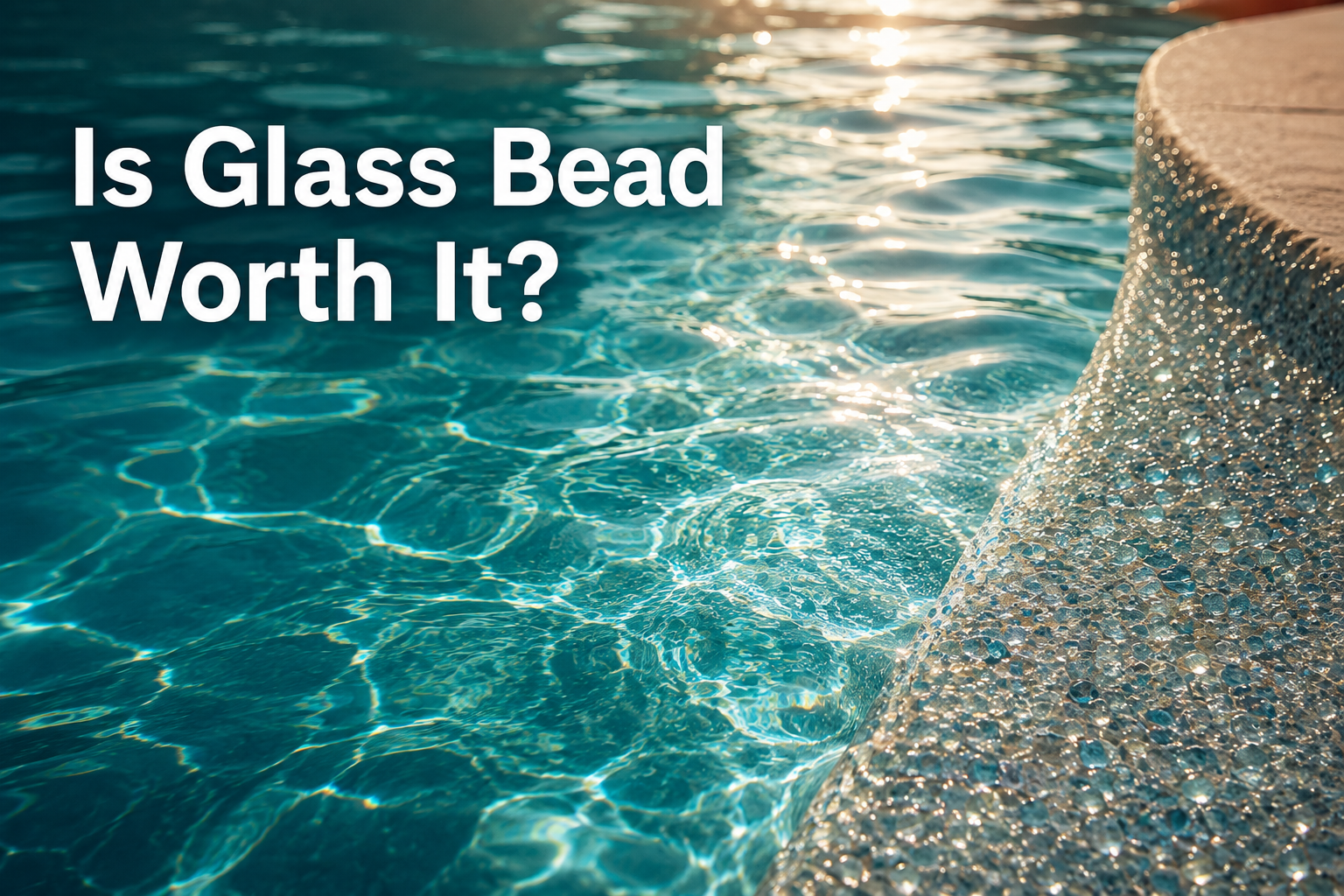
Glass bead finishes use tiny tumbled glass beads that catch and bounce sunlight. On a bright South Florida afternoon, the pool floor sparkles in a way quartz doesn't. At night, under well-placed pool lights, that light reflectivity becomes even more striking. Our guide to glass bead installations helps you compare glass bead and quartz aggregate finishes in more depth, including color choices and what a quality application looks like.
Which Finish Is More Durable?
Both finishes offer comparable durability when properly installed and maintained, so the decision comes down mostly to aesthetics and budget. Either one outlasts standard white plaster by a wide margin.
Quartz is one of the hardest minerals used in pool surfaces, which helps it resist etching and staining. Glass is nonporous, so it resists absorbing stains and gives algae fewer places to grip. In practice, finish durability depends on two things more than the material itself: the skill of the crew applying it and the balance of your water chemistry. Before choosing a contractor, it helps to know what to look for in a pool resurfacing company in Boca Raton, from crew experience to how they prep and cure the surface.
Heavy summer rain, frequent swimming, and constant UV exposure in Broward and Palm Beach counties push water chemistry out of range quickly. A finish that's applied correctly, cured properly, and kept in balanced water will typically give you many years of service, whichever material you choose.
Quartz Aggregate vs. Glass Bead Pool Finish: Which One Fits Your Backyard?
Choose quartz aggregate for a natural stone look with subtle texture. Choose glass bead for shimmer, a smoother feel, and more luminous water color.
Quartz suits classic and Mediterranean-style homes, families who like a little extra grip on steps and benches, and homeowners who prefer an understated look. Glass bead suits contemporary architecture, pools that serve as a nighttime focal point, and anyone who spends long afternoons on a tanning ledge.
"Quartz gives you that natural stone look, while glass bead adds a bit more sparkle, so it really comes down to which aesthetic a homeowner is after," says Matt Patella of The Time Is Now Design and Build, who brings 11 years of proven expertise to pool projects across South Florida.
Seeing physical samples in your own backyard light makes the choice far easier. That's why you can compare finish options with a free estimate and see both materials next to your decking before anything is decided.
Quick Questions
Which finish costs more, quartz aggregate or glass bead?
Glass bead finishes usually carry a modest premium over standard quartz aggregate because the specialty glass costs more to produce. Final pricing depends on the specific product line, your pool's size and shape, and the condition of the existing surface. A site visit gives you the most accurate number for your pool.
Can quartz and glass bead be combined in one finish?
Yes. Many premium pool finish products blend glass beads into a quartz or pebble aggregate mix, giving you natural texture and reflective shimmer in a single surface. These blends are popular with South Florida homeowners who want a stone look by day and a little sparkle under evening lighting.
Does either finish feel rough on bare feet?
Neither finish feels rough when properly applied. Quartz has a fine, slightly textured feel that many families appreciate for grip on steps and benches. Glass bead feels noticeably smoother because the beads are tumbled and rounded, which makes it a favorite for tanning ledges and pools that kids use every day.
See Both Finishes in Your Own Backyard
If you're weighing a quartz aggregate vs glass bead pool finish, the clearest answer comes from seeing them side by side at your home. With 11 years of in-house craftsmanship on pools in Davie, Weston, Fort Lauderdale, Parkland, and Boca Raton, our team offers transparent material options and honest guidance.