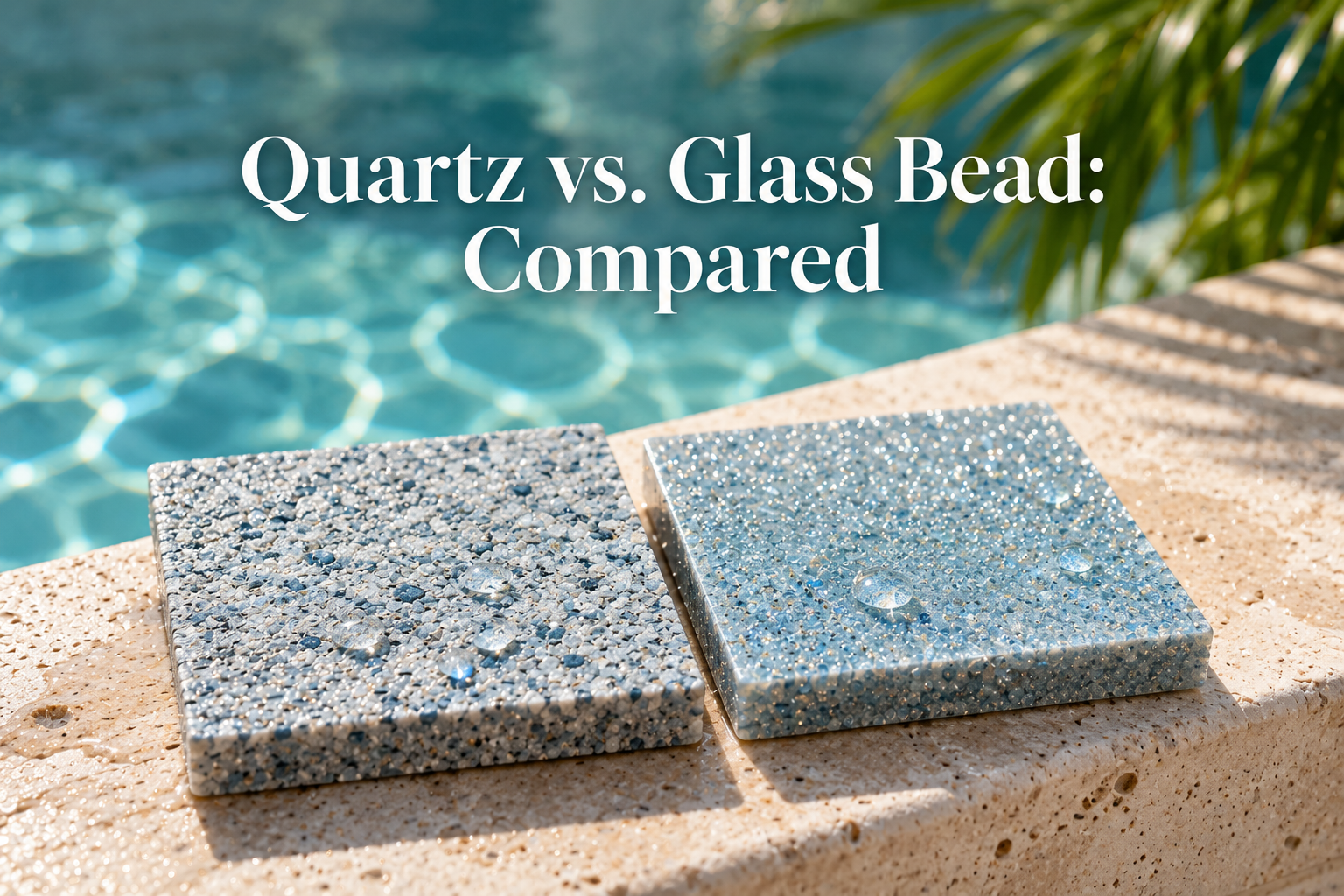
TL;DR: Yes, new plaster can go over old plaster, but only when the existing layer is still firmly bonded to the shell and properly prepared with roughening and a bond coat. If a tap test reveals hollow spots or delamination, the old plaster must be chipped out first, or the new finish will fail early.
Pool owners in Fort Lauderdale and Boca Raton ask us this often: can a contractor plaster over existing pool plaster, or does everything have to come off? The answer depends on what's happening beneath the surface. Here's how we judge the old layer, what proper prep looks like, and when a full chip-out is the smarter investment.
When Can You Plaster Over Existing Pool Plaster?
You can when the old plaster is sound. The decision rests on whether the existing layer is still bonded to the gunite shell, and only an inspection of the drained pool can confirm that.
Plaster wears out in two ways. Surface wear, like staining, roughness or faded color, stays in the top of the finish and leaves the bond intact. Bond failure happens deeper, where plaster separates from the shell. From the deck, the two can look alike. With the water out, they're easy to tell apart.
When the bond is good, you can replaster a pool over old plaster and use the existing layer as a solid base. When it's gone, any new finish inherits that weakness.
A Tap Test Reveals Whether the Old Layer Still Holds
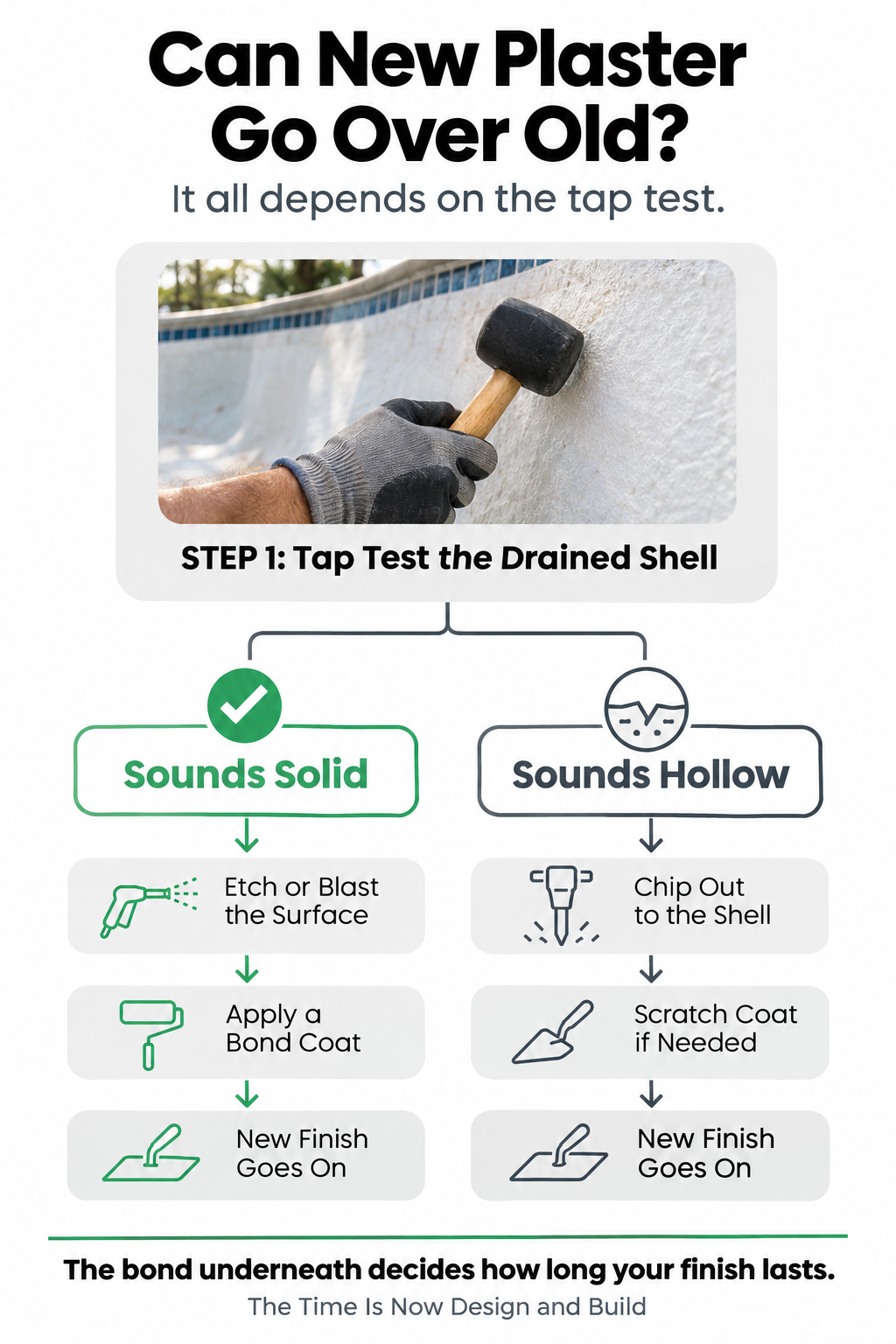
Tapping the drained surface with a mallet tells you a lot. Solid areas sound dull and firm, while hollow, drum-like sounds signal plaster that has separated from the shell.
Our crew taps the whole pool in a grid, including steps, benches and the areas around lights and returns, and marks every hollow spot in chalk. A few small spots can be cut out and patched. Large connected zones tell a different story.
Cosmetic issues like fine crazing lines across the surface don't automatically mean the plaster has delaminated. "Every shell gets tapped before we quote it," says Matt Patella of The Time Is Now Design and Build, who has 11 years in outdoor design and build. "Skipping that ten-minute test is how pools end up with pop-offs a year after a brand-new finish."
Proper Prep Creates the Bond the New Finish Needs
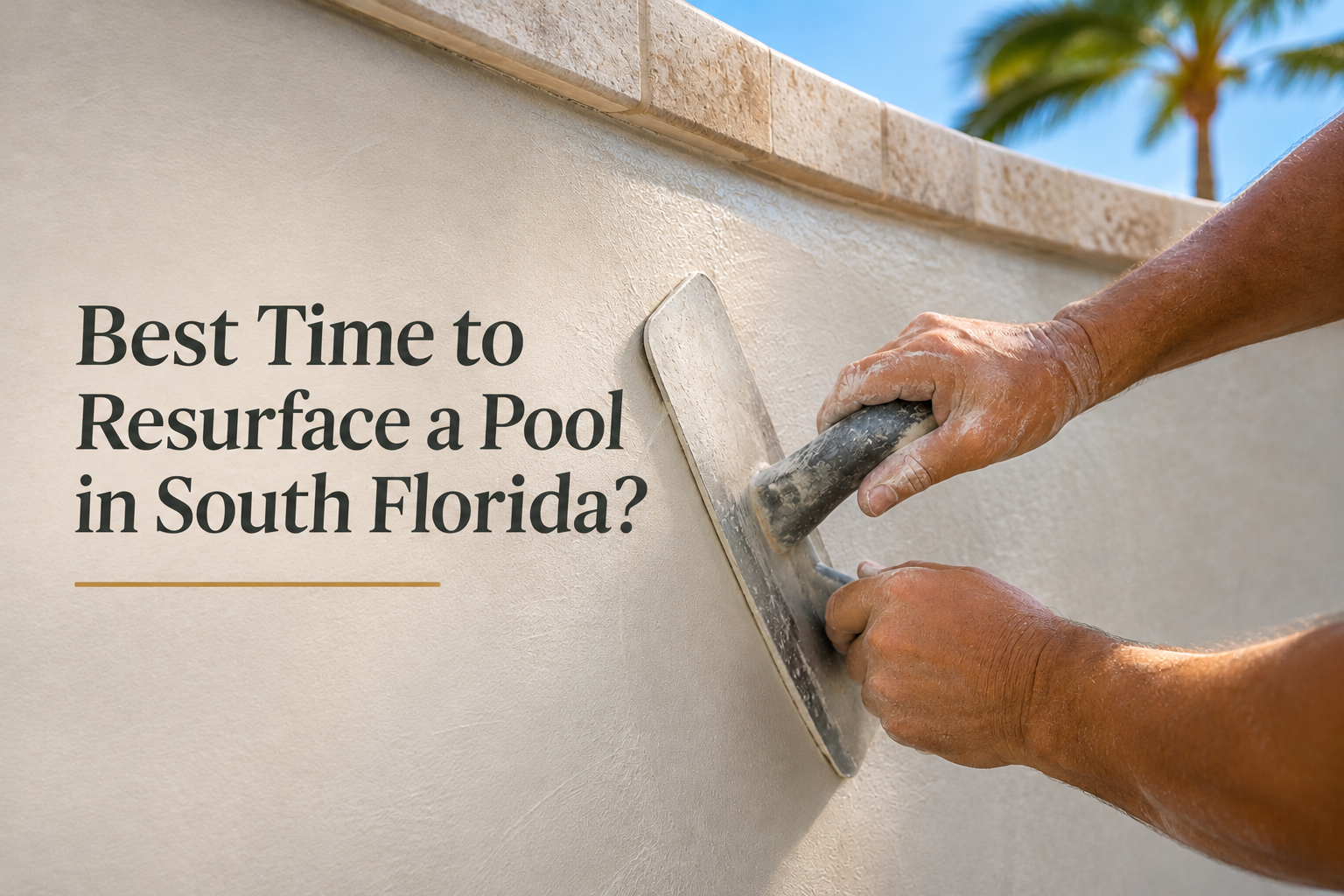
Sound plaster still needs to be roughened by etching or blasting, cleaned, and coated with a bond coat so the new finish grips mechanically.
Old plaster is smooth and dense, which gives fresh material little to hold. An acid etch or sandblasting opens up the texture, then a thorough wash removes dust and residue. The bond coat follows, a thin, rough layer that fresh plaster or an aggregate finish locks into. Skipping it, or applying it over a dirty surface, is one of the most common reasons a new finish fails early.
Delamination Calls for a Full Chip-Out
When large areas sound hollow or are already popping off, the old plaster has to come off down to the shell before any new finish goes on.
Pop-offs, the flaky patches where plaster has broken away, are the clearest sign. Pools that already carry several layers from earlier jobs are another, since each layer depends on the one beneath it. To chip out pool plaster, the crew removes every layer down to the gunite, repairs what that exposes, and may add a scratch coat to even the surface. That diagnosis is the same one behind deciding between an acid wash and a full resurface.
Scheduling the Work for the Best Result
Once the scope is clear, timing the application for mild, dry weather gives the new finish the best start.
South Florida's high water table adds pressure beneath a drained pool, so experienced crews keep the shell empty for as little time as possible. We explain why South Florida's dry season suits resurfacing in our seasonal guide.
Every project in our pool resurfacing services starts with a full shell assessment, so the scope is settled before any material is ordered.
Frequently Asked Questions About Plastering Over Old Pool Plaster
How many times can a pool be replastered before a full chip-out?
There's no fixed number, but each added layer adds thickness and depends on the bond beneath it. Many pools reach a point where a full chip-out to the shell is the only reliable option. An assessment of how many layers already exist guides that recommendation.
Does plastering over old plaster make the pool smaller?
Not noticeably. A new finish layer is thin relative to the pool's dimensions, so swimming depth and the overall feel don't change. What matters more is how fittings, lights and tile lines align with the new surface, which an experienced crew plans for.
Can a pebble or quartz finish go over old plaster?
Yes. Aggregate finishes can go over sound, properly prepared plaster, just like standard plaster. The existing layer must pass inspection, be roughened and receive a bond coat. An aggregate finish won't hide or fix a delaminating surface underneath.
Know Your Shell's Condition Before You Choose a Finish
The right finish starts with facts about the surface beneath it. Our free pool assessment includes a complete tap test and a written scope, so you know whether you can plaster over existing pool plaster or need a chip-out before work begins. Our in-house pool crew brings 11 years of proven expertise to Southwest Ranches, Davie, Fort Lauderdale, Boca Raton and Delray Beach.