TL;DR: Quality turf backing drains far faster than South Florida rain falls. Perforated backings are typically rated around 30 inches per hour and flow-through backings at 400 inches or more, while even severe Broward storms peak near 3 to 6 inches per hour. Whether your lawn stays dry depends on the base, grading and soil underneath.
The artificial turf drainage rate Florida homeowners should care about is rarely the number printed on a spec sheet. In April 2023, Fort Lauderdale took in more than six inches of rain in a single hour and close to 26 inches in one day. Storms like that test every yard in Broward County. If you own a home in Davie, Weston or Southwest Ranches and are weighing turf, this article covers three things: how fast turf really drains, where water actually gets stuck, and how a proper installation handles rainy season.
What Is the Real Artificial Turf Drainage Rate in a Florida Storm?
The turf itself is rarely the bottleneck. Most quality backings pass water anywhere from five to more than a hundred times faster than a heavy storm delivers it, so real-world performance comes down to what sits beneath the surface.
A strong South Florida afternoon thunderstorm drops 2 to 4 inches of rain per hour at its peak. The most severe cells, the kind that trigger flash flood warnings across Broward and Miami-Dade, can briefly push 5 to 6 inches.
Turf backings are rated far higher. Perforated backings commonly drain at 30 inches per hour or more, and flow-through backings run into the hundreds. On paper, no rain event in our region outpaces a premium quality turf product. When a lawn holds water, the cause is almost always below the turf.
How Does Backing Type Set the Drainage Ceiling?
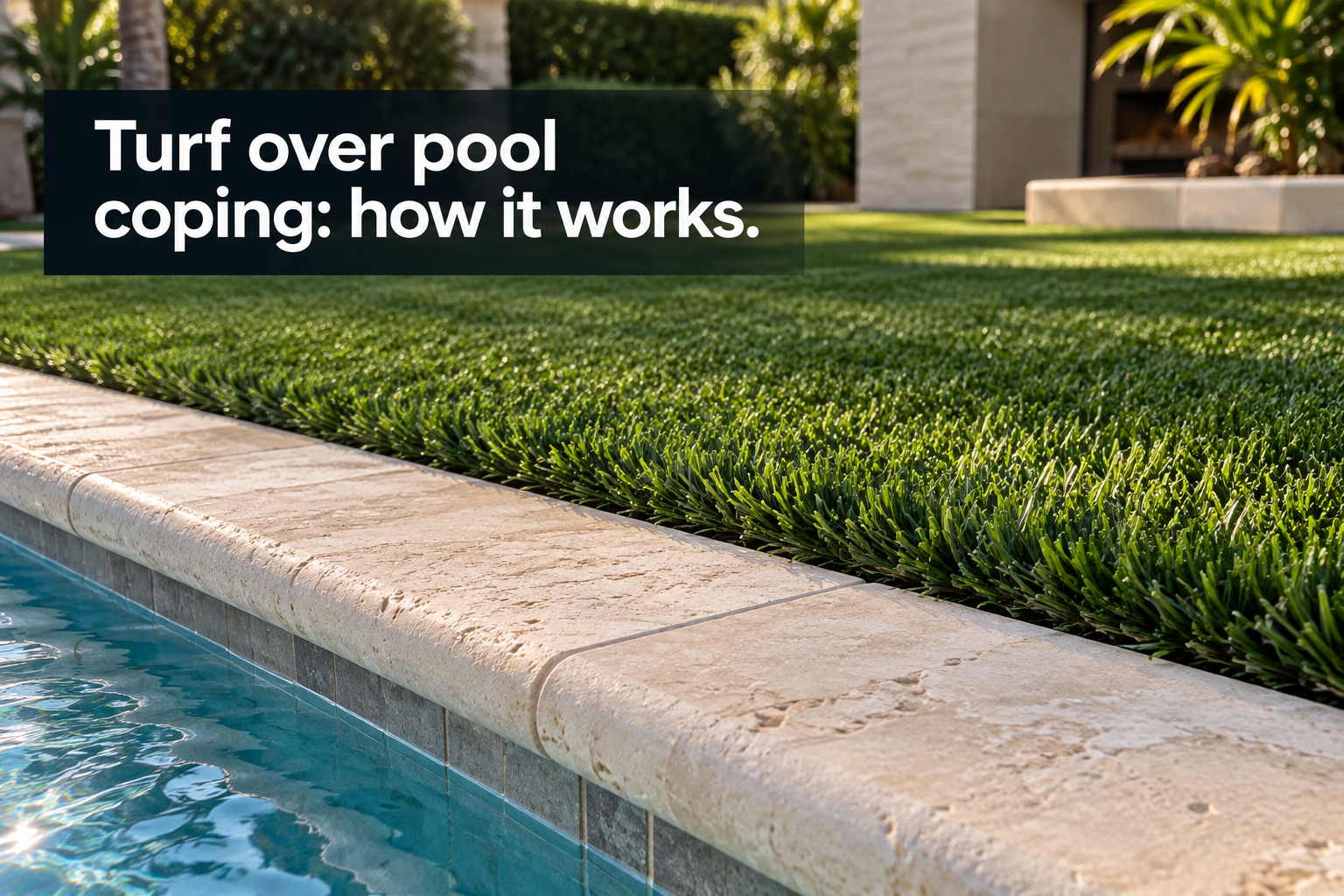
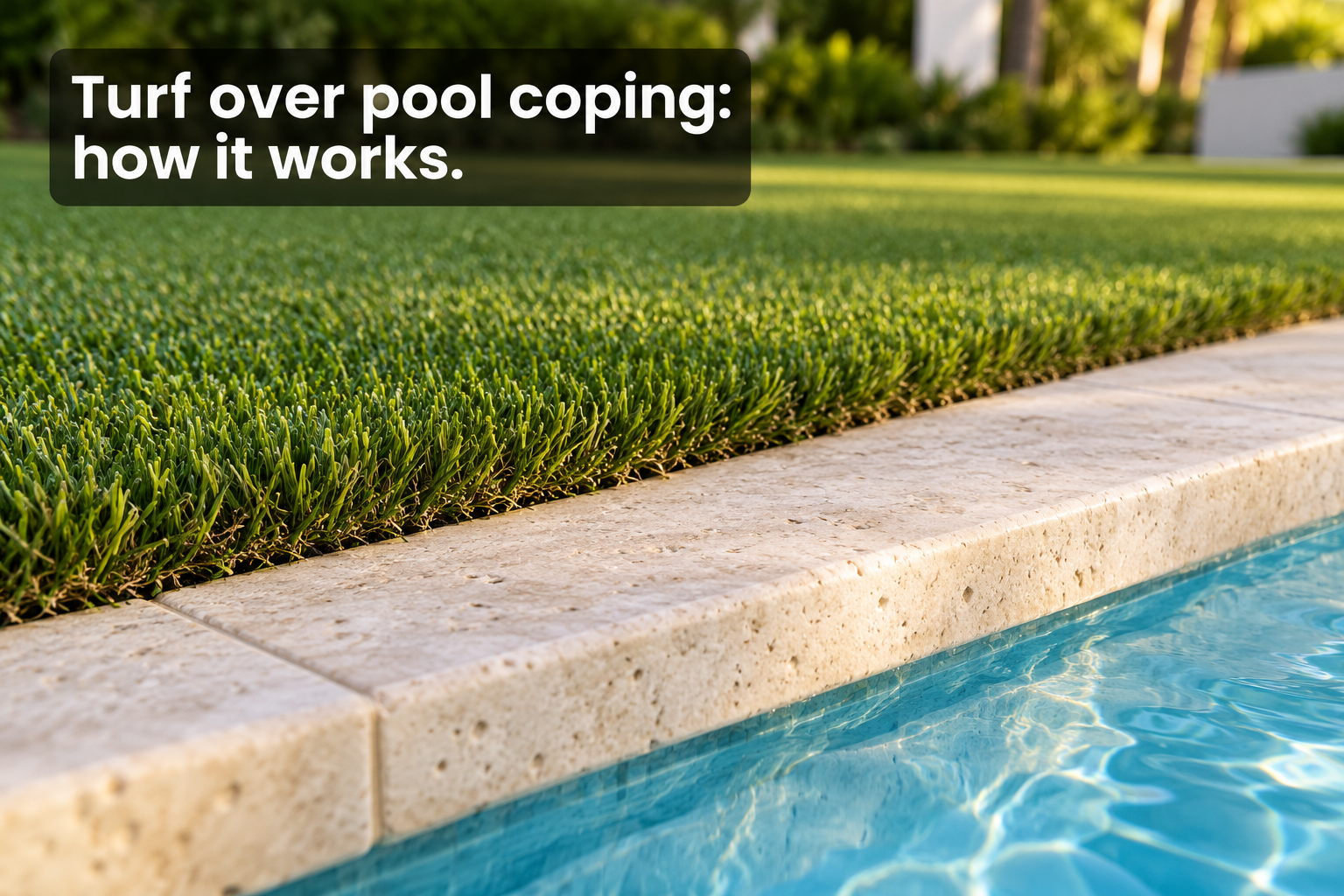
Perforated backings drain through evenly spaced holes. Fully permeable flow-through backings let water pass across the entire surface, which gives faster and more uniform drainage.
Perforated, or hole-punch, backing is the industry standard. Holes spaced a few inches apart move water at roughly 30 inches per hour per square yard, which comfortably exceeds anything Broward County sees. The tradeoff is that water exits at specific points, so a poorly prepared base can make drainage feel uneven.
Flow-through backing removes that limitation. Because every square inch is permeable, many of these products are rated at 400 inches per hour or more. That matters most in pet zones, play areas and shaded side yards that stay damp. On larger properties, we pair the right backing with engineered drainage for estate lawns.
Why Turf Base Drainage in Broward County Comes Down to Grading and Soil
Water that passes through the turf needs somewhere to go. A compacted aggregate base, a slight grade and the native soil’s absorption rate determine how fast a lawn actually clears.
A proper base is a layer of compacted crushed aggregate shaped with a gentle slope that carries excess water away from the house. Material choice matters. A base that compacts too densely, as some fine limerock blends do, can slow water down before it ever reaches the soil.
Broward soils vary from one street to the next. Sandy lots in Coral Springs absorb quickly. Some Davie and Southwest Ranches properties sit on denser fill or a high water table during rainy season. When the ground is already saturated, grading becomes the main escape route. If you’re comparing bids, it helps to understand what a proper South Florida turf base includes.

What Does Standing Water on Artificial Turf After a Storm Mean?
Puddles that linger usually trace back to low spots, compacted clay pockets or downspouts discharging onto the turf. All of these can be corrected.
When homeowners describe artificial turf flooding after rain, start with timing. If water clears within 15 to 30 minutes of the rain stopping, the system is working. Water that sits longer in the same spots points to a dip in the grade or dense soil under the base. Puddles along the house usually mean a downspout is dumping roof runoff onto one small patch of turf.
Fixes range from redirecting downspouts or adding a French drain to lifting a section, regrading and recompacting the base. Debris can also clog perforated backings over time, and a thorough rinse usually clears it. Most drainage complaints we see come from installation shortcuts that cause problems later.
Drainage Is Engineered Into Every Installation
Every site is assessed for slope, soil and water sources before a single roll of turf is ordered.
We look at where the roof drains, which way the yard pitches and where water has collected in past storms. From there we choose the backing, set the base depth and plan the grade. Our artificial turf installation process starts with a drainage review on every property, and our in-house craftsmanship means no part of the drainage work is handed off.
“Clients are always surprised that the turf isn’t the bottleneck,” says Matt Patella, who has spent 11 years designing and building outdoor spaces across Broward County. “The rain goes straight through the backing. What happens underneath is what we spend our time engineering.”
Quick Questions
Can artificial turf flood during a hurricane?
Turf can’t prevent area-wide flooding when the ground is saturated or a nearby canal overflows. Once the water recedes, a properly installed lawn drains and dries quickly, and temporary submersion won’t harm the turf. After the storm, rinse away debris and brush the fibers upright. In Matt Patella’s experience, recovery takes an afternoon of cleanup, with no reseeding or resodding.
Does rain clean pet turf on its own?
Rain helps flush the surface, but it can’t replace routine rinsing and an enzyme cleaner in pet areas. In South Florida heat, a quick weekly rinse of high-use zones keeps odor in check between storms. That routine matters most during the dry season, roughly November through May, when rain is infrequent.
How soon after a storm can you walk on artificial turf?
On a well-built base, the surface is usually walkable within minutes of the rain stopping. Infill may stay damp a little longer, but there’s no mud and no risk of damaging the lawn by walking on it. For families in Weston and Davie, that’s one of the biggest lifestyle upgrades over natural grass in rainy season.
Schedule Your Drainage-Ready Turf Estimate
Install now and your lawn is settled before rainy season returns in June. Every free estimate includes a site drainage review, so you’ll know how your yard handles a storm before any work begins.
We serve homeowners in Davie, Weston, Southwest Ranches, Fort Lauderdale and Coral Springs. Our in-house crew grades and compacts every base, backed by 11 years of proven expertise in Broward installations. A strong artificial turf drainage rate in Florida starts with the backing, but your yard stays dry because of the work beneath it.