TL;DR
- Pool resurfacing in Broward County typically costs $5,000–$15,000+ depending on pool size and finish material.
- The three main finish options are standard plaster, quartz aggregate (Diamond Brite), and pebble aggregate (PebbleTec), each with a different lifespan and price point.
- South Florida's UV exposure, heat, and saltwater use accelerate surface wear, making material selection one of the most important decisions you'll make for your pool's long-term performance.
If you've been watching your pool surface slowly lose its luster, you already know something is off. The texture feels rougher than it used to. There are stains that chemicals won't touch. Maybe you've noticed what looks like a fine web of cracks spreading across the shell. In Davie and throughout Broward County, South Florida's heat, saltwater use, and relentless UV exposure mean pool surfaces wear faster than in most of the country. The good news: resurfacing is one of the most impactful upgrades you can make to an outdoor property. Knowing what your options are before you talk to a contractor puts you in a much stronger position. This guide covers the finish materials, real cost ranges, what the process involves, and how to select a contractor who will actually do the job right.
How Do You Know When Your Pool Needs Resurfacing?
The clearest signs are surface crazing (a network of fine cracks), rough texture that scratches feet, persistent staining that won't respond to chemical treatment, and visible delamination or hollow spots. Most South Florida pool surfaces last 7–12 years before resurfacing is needed, depending on material and water chemistry management.
When a surface has seen years of exposure to Broward County's climate, the deterioration follows a predictable pattern. A pool that was plastered a decade ago and hasn't had chemistry managed consistently will show its age in ways that go beyond cosmetics.
Surface crazing explained. Crazing refers to a network of fine cracks in pool plaster, typically caused by age, improper water chemistry, or rapid drying during installation. Minor crazing is cosmetic and common in older pools. Extensive crazing that runs through the full plaster layer, or that comes with delamination (hollow spots where the surface has separated from the shell), means it's time to resurface. You can test for delamination by tapping on the surface with a coin or knuckle. A hollow sound in patches confirms the surface has lifted.
The difference between cosmetic wear and structural damage matters when you're planning your budget and timeline. Cosmetic issues such as fading color and minor staining can sometimes be addressed with chemical treatments or minor spot repairs. Structural failure requires full resurfacing. A qualified contractor will assess the surface before recommending a scope of work. If they quote without looking at the shell, walk away.
What Are the Main Pool Resurfacing Finish Options in South Florida?
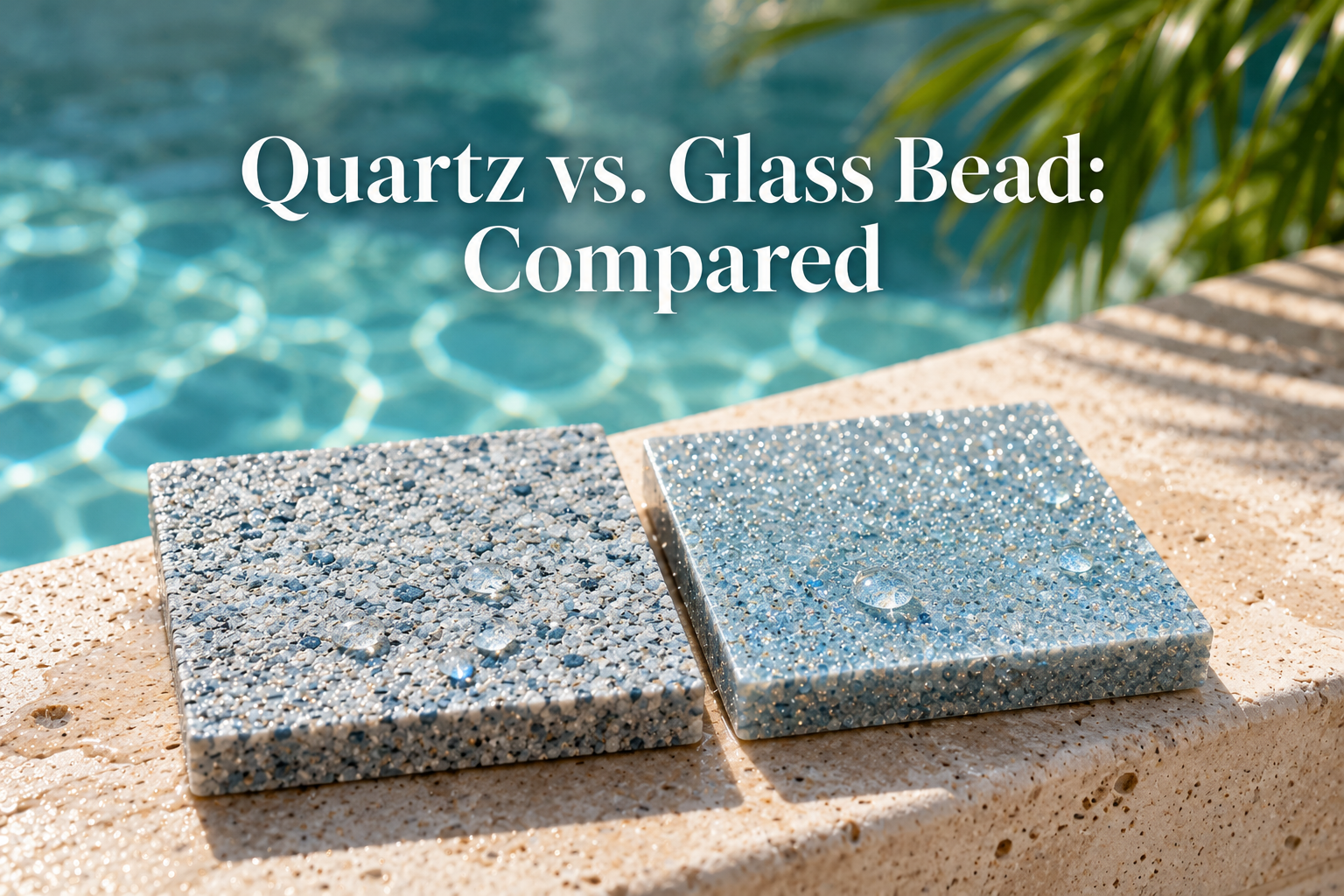
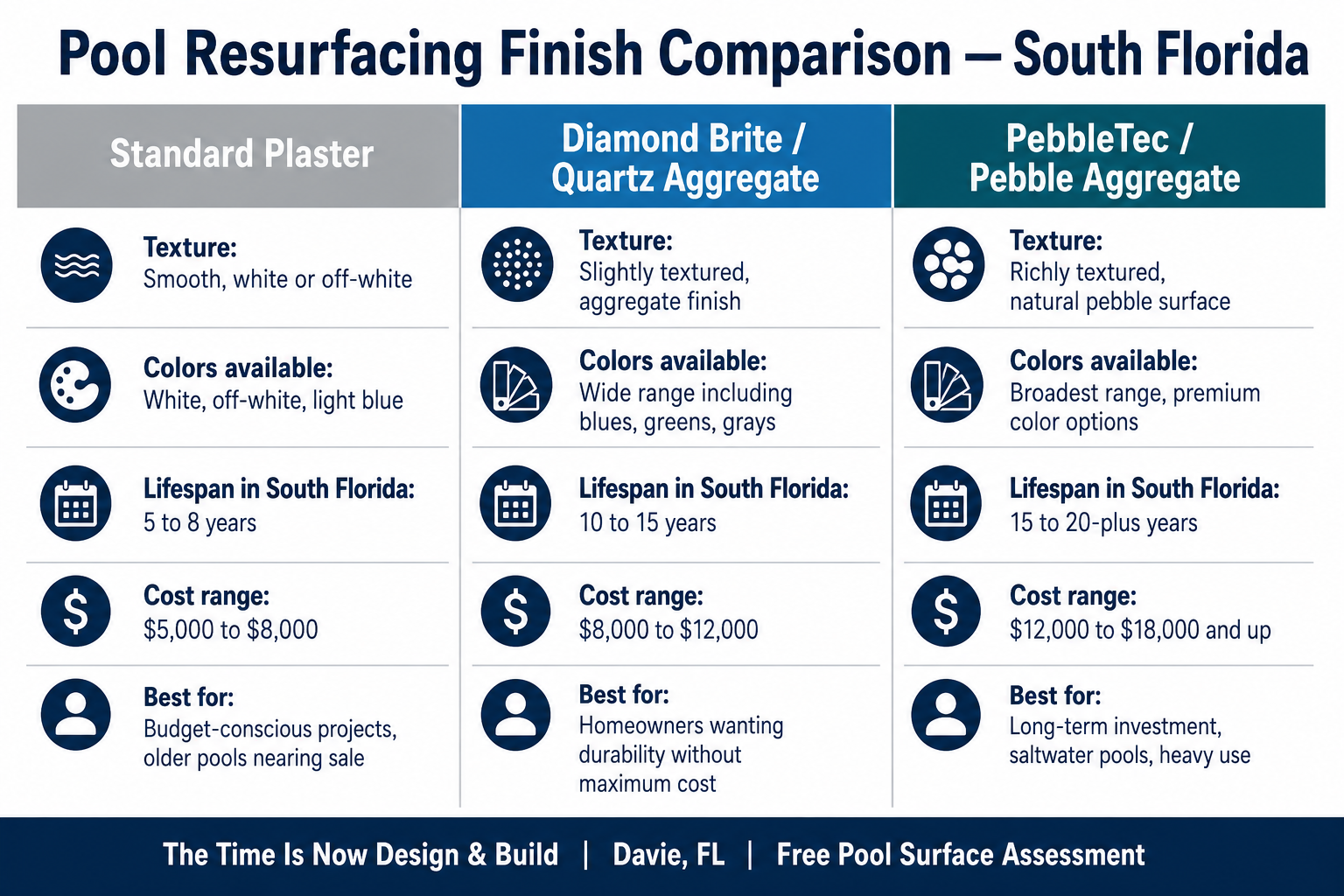
South Florida homeowners choose from three primary finishes: standard white plaster (lowest cost, shortest lifespan), quartz aggregate finishes like Diamond Brite (mid-range cost, 10–15 year lifespan), and pebble aggregate finishes like PebbleTec (highest cost, 15–20+ year lifespan). Each has distinct texture, color range, and maintenance characteristics. If you want to go deeper on how these two top-tier finishes compare side by side, read our PebbleTec vs Diamond Brite for South Florida pools breakdown.
Standard plaster is the baseline. It's white marcite, a mixture of Portland cement and white marble dust, and it's been the pool finish standard for decades. The cost is the lowest of the three options, and it installs quickly. The tradeoff is lifespan. In South Florida conditions, standard plaster typically lasts 5–8 years before it starts to show real wear. It's also the most susceptible to staining, rough texture, and calcium deposit buildup from the mineral-heavy water common throughout Broward County.
Diamond Brite and quartz aggregate finishes are the middle ground that most South Florida pool owners land on for value and durability. Quartz aggregate is blended into the plaster, creating a harder surface that resists chemical erosion, UV fading, and rough texture over time. The color range is substantially broader than standard plaster, and the added durability makes the additional cost easy to justify. Expect a lifespan of 10–15 years with proper chemistry maintenance.
PebbleTec and premium pebble aggregate finishes represent the top tier. Natural pebbles (river pebbles, quartz pebbles, or glass beads depending on the product line) are set into the plaster surface and exposed through a process that leaves the finish textured and highly durable. PebbleTec and comparable pebble aggregate products are exceptionally resistant to UV degradation, chemical attack, and physical wear. For pools that see heavy use, saltwater systems, or high bather loads, the 15–20+ year lifespan makes the higher upfront cost a calculated investment rather than a luxury.
How Much Does Pool Resurfacing Cost in Broward County?
A standard plaster resurface on a typical Broward County pool runs $5,000–$8,000. Diamond Brite and quartz finishes run $8,000–$12,000. PebbleTec and premium pebble aggregate finishes run $12,000–$18,000 or more depending on pool size, access, and current surface condition. For a specific size example, see our guide on how much it costs to resurface a 15x30 pool in Broward County.
These ranges reflect an average residential pool in the 400–600 square foot surface area range. Larger pools, unusual shapes, or pools with significant structural prep work will land toward the higher end or beyond. A pool with extensive delamination or damaged beam work will require additional prep before any new finish can be applied, and that prep cost is separate from the finish itself.
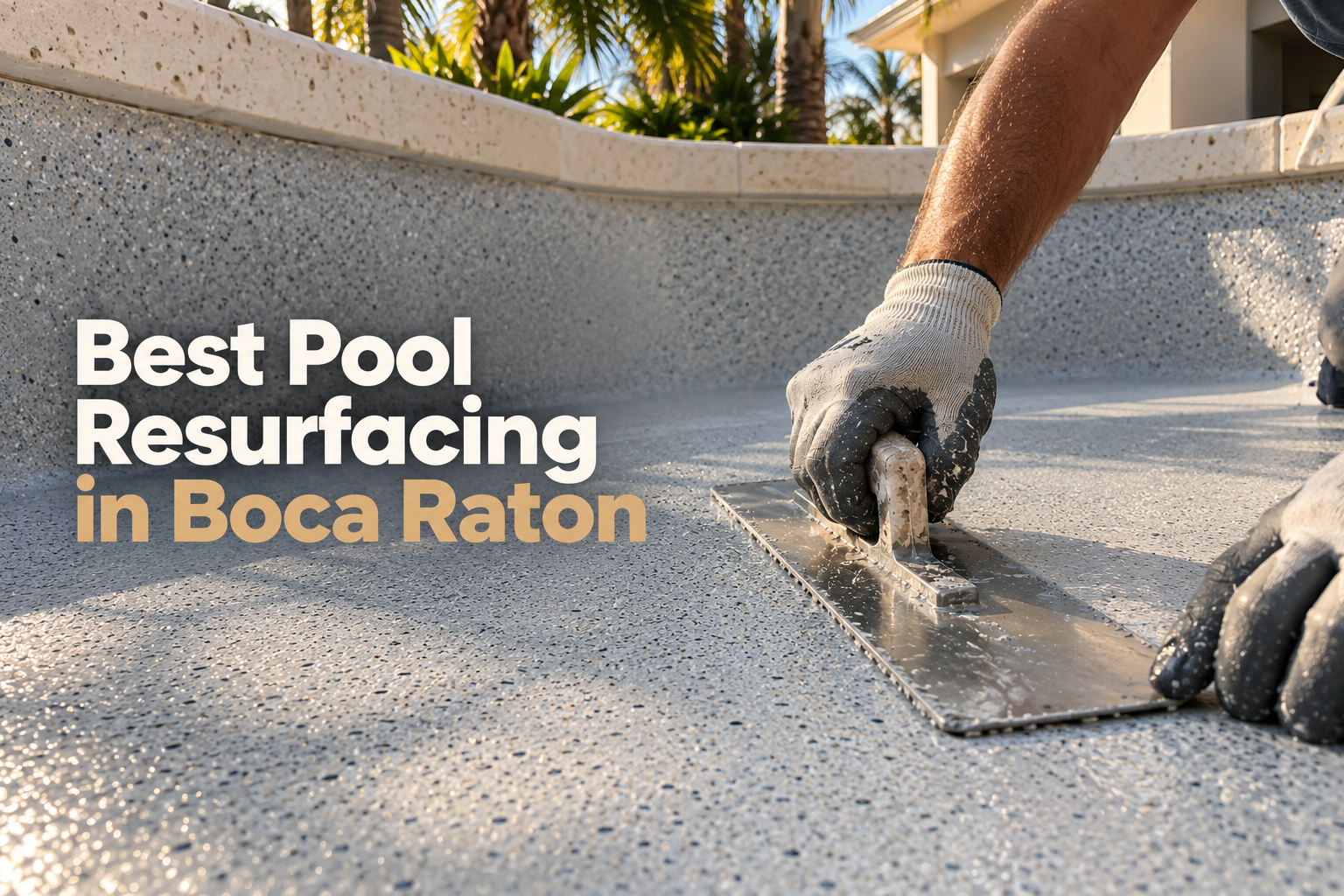
What a resurfacing quote should include. A legitimate scope of work covers draining and cleaning the pool, chipping or preparing the existing surface for bonding, applying the new finish to manufacturer specifications, and filling and treating the water through the startup balancing process. Get the finish product specified by name in writing. Not just "pebble finish" or "aggregate," but the actual product and color selection. If a quote is vague on materials, that's a problem.
For a full breakdown of what drives pricing up or down on a resurfacing project, our detailed pool resurfacing cost breakdown for Broward County covers every variable worth understanding before you request a quote.
Hidden costs homeowners miss. The startup chemical balancing process after resurfacing runs 28–30 days and requires water chemistry monitoring and adjustment, which may involve contractor visits or chemistry products not included in the base quote. Deck repairs, tile replacement, and coping work are separate line items. If your pool equipment (pump, filter, automation) needs servicing while the pool is drained, that's the logical time to address it. Factor those items into your total project budget before signing anything.
Does Pool Resurfacing Require a Permit in Broward County?
In most Broward County municipalities, a pool resurfacing project requires a permit if structural work is involved. Cosmetic-only resurfaces may not require one in all jurisdictions, but this varies by city. Your contractor should verify permit requirements for your specific municipality before work begins.
Davie, Fort Lauderdale, Weston, and other cities within Broward County each have their own building departments with specific requirements. A licensed contractor operating within the county will know the process and should pull any required permits as part of the project scope. If a contractor tells you permits aren't necessary and you suspect structural work will be involved, ask for clarification in writing. Unpermitted structural work can create complications when you go to sell the property.
How Long Does Pool Resurfacing Take And When Can You Swim?
The physical resurfacing process typically takes 3–5 days. After the new surface is applied, pools require a startup chemical balancing process lasting 28–30 days before the water chemistry is fully stable. Most contractors advise waiting at least 28 days before allowing heavy use, though light swimming is often permitted after the first week.
The 28–30 day startup period is not a guideline. It's a chemistry process. The new surface is curing and the plaster dust (or aggregate dust) is being cleared from the water through a series of brushing and treatment steps. Swimming too early or introducing heavy bather loads before the surface has cured can damage the finish prematurely. Plan your resurfacing project for late spring or fall in South Florida, not right before a summer of heavy use, and not during hurricane season when project timelines can be disrupted.
How Do You Choose a Qualified Pool Resurfacing Contractor in South Florida?
A qualified South Florida pool resurfacing contractor should be licensed by the Florida Department of Business and Professional Regulation (DBPR), carry liability and workers' comp insurance, provide a written scope of work specifying the finish product by name, and offer a minimum 3-year warranty on labor and materials.
Ask specifically whether they use in-house crews or subcontract the labor. In-house teams have a direct accountability relationship with the contractor overseeing the project. Subcontracted crews introduce a layer of separation that can complicate quality control and warranty resolution if something goes wrong after the job is complete.
If you're also considering a full pool build or major renovation alongside your resurfacing project, our guide to luxury pool contractors in Fort Lauderdale is worth reading before you make any decisions.
Questions to ask before signing a pool resurfacing contract:
- Are you licensed with the DBPR and can I verify your license number?
- Does your quote include all prep work, startup chemicals, and the balancing period?
- What specific product and color are you applying, and can I see samples?
- Do you pull permits for resurfacing in my municipality?
- What is covered under your warranty and for how long?
Pool resurfacing season fills quickly in South Florida. Reputable contractors typically schedule 4–8 weeks out during peak season. Starting the contractor selection process early gives you more options and more time to ask the right questions.
Frequently Asked Questions About Pool Resurfacing in Broward County
How much does pool resurfacing cost in Broward County, FL?
Pool resurfacing in Broward County typically costs $5,000–$8,000 for standard plaster, $8,000–$12,000 for quartz aggregate finishes like Diamond Brite, and $12,000–$18,000 or more for premium pebble finishes like PebbleTec. Final cost depends on pool size, surface condition, and the finish material selected.
Is PebbleTec worth the extra cost over Diamond Brite in South Florida?
For South Florida pools that see heavy UV exposure, saltwater use, or high bather loads, PebbleTec's longer lifespan (15–20+ years compared to 10–15 for Diamond Brite) often makes it the better long-term value. The higher upfront investment is typically offset by avoiding a resurface cycle sooner than you'd otherwise need one.
How long do you have to wait to swim after pool resurfacing?
Most contractors recommend waiting at least 28 days after pool resurfacing before heavy use. The first 28–30 days involve a startup chemical balancing process that stabilizes the new surface. Light swimming is often permitted after the first week, but aggressive use (diving, pool toys, heavy bather load) should wait the full cure period.
Does pool resurfacing require a permit in Broward County?
Permit requirements vary by municipality within Broward County. Structural work always requires a permit. Cosmetic-only resurfaces may or may not require one depending on your city. A licensed pool contractor should verify and pull the appropriate permits for your specific location before work begins.
What is pool surface crazing and should I be concerned?
Crazing refers to a network of fine surface cracks in pool plaster, typically caused by age, improper water chemistry, or rapid drying during installation. Minor crazing is cosmetic and common in older pools. Extensive crazing that extends through the full plaster layer, or that comes with delamination, means the surface needs full resurfacing.
Matt Patella's Perspective on South Florida Pool Surfaces
"When a homeowner calls me about pool resurfacing, the first thing I want to know is how old the surface is and what their water chemistry has looked like over the years. A pool that's been running slightly acidic for a decade will eat through plaster faster than anything. South Florida's sun and heat accelerate everything. What might last fifteen years in a northern climate might need attention in ten here. That's not a reason to panic; it's a reason to choose the right material from the start and maintain your chemistry properly."
— Matt Patella, The Time Is Now Design & Build
Ready to Find Out What Your Pool Surface Actually Needs?
Pool resurfacing done right starts with an honest look at what's in front of you. Homeowners in Davie, Fort Lauderdale, Weston, Boca Raton, and Southwest Ranches can schedule a free pool surface assessment with The Time Is Now Design & Build. Matt Patella's team brings 11 years of South Florida experience, full DBPR licensing, an entirely in-house pool crew, and a full warranty on labor and materials backing every project.
Get a clear finish recommendation, a real cost estimate, and a timeline that works for your schedule. Schedule your free pool assessment with our pool resurfacing contractor in Broward County and go into the process knowing exactly what you're working with.
Reputable contractors fill their schedules quickly in South Florida, typically 4–8 weeks out. If you're planning a project this season, starting the conversation now gives you the best selection of timelines and the full attention your project deserves.