TL;DR: Engineered aluminum louvered pergola systems can be designed to meet Florida Building Code wind load requirements for Broward County, but not every system sold in South Florida is actually rated for our wind zone. The deciding factor is whether the system carries a valid Notice of Acceptance (NOA) or a site-specific engineering stamp for your property's wind exposure category.
If you own a home in Davie, Weston, or anywhere across Broward County, the question of whether a louvered pergola can survive a major hurricane is worth asking before you sign a contract. South Florida's wind environment is one of the most demanding in the country, and a structure that performs fine in the Carolinas may not be code-compliant here. The good news is that the right engineered system, properly permitted and installed, is built for exactly this climate.
What Wind Ratings Do Pergolas Need to Meet in Broward County?
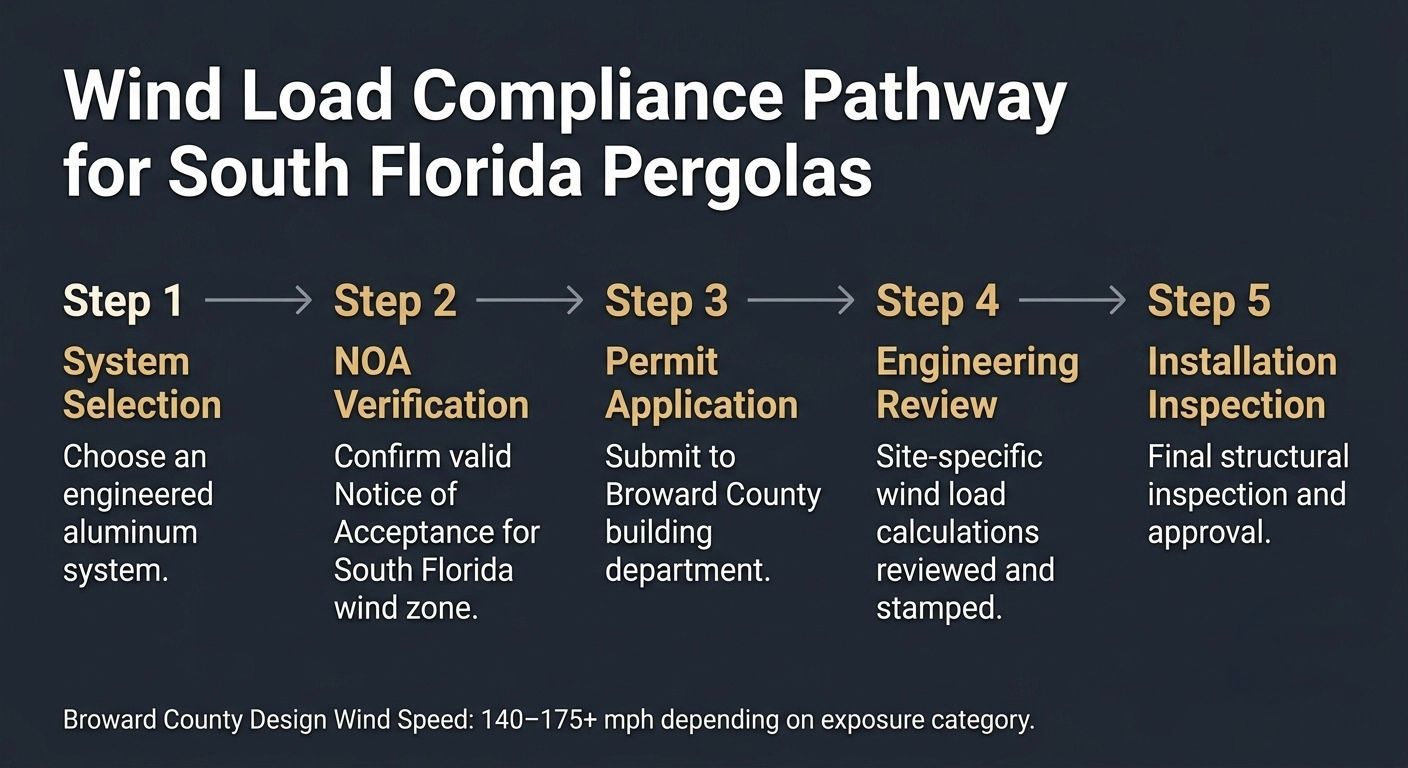
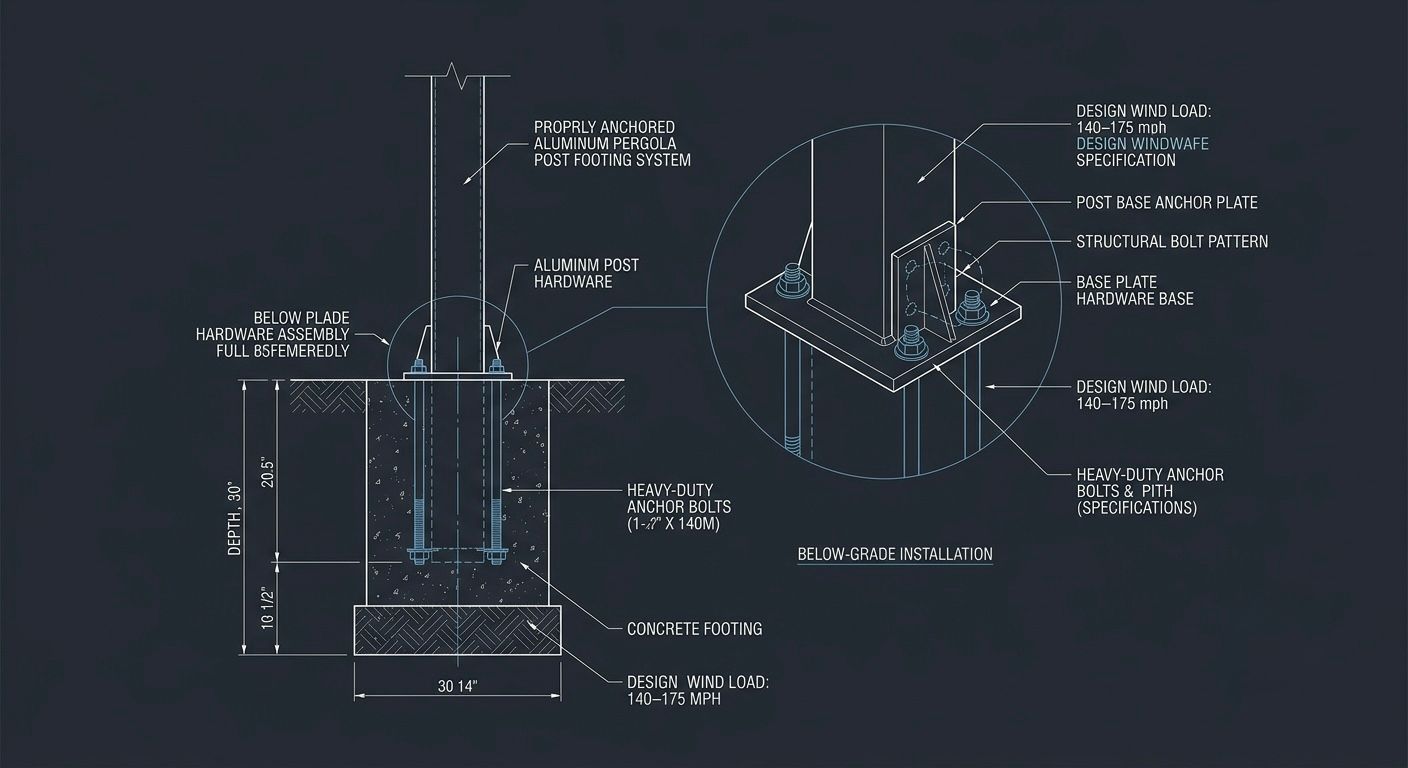
Broward County sits within a high-velocity wind zone under the Florida Building Code, requiring permanent structures to withstand design wind speeds between 140 and 175-plus mph depending on your specific location and exposure category. A pergola built to those specifications is engineered to handle the wind loads that come with a Category 4 or 5 storm, not just a typical tropical system.
This distinction matters because many pergola systems are marketed nationwide with generic structural ratings that do not account for South Florida's specific wind zone classifications. A product rated for 110 mph in a Georgia suburb is not the same as a product designed for a 160 mph design wind speed in a coastal Broward property. The Florida Building Code requires engineering documentation that is specific to your wind loads, not a national spec sheet.
When you're evaluating contractors, ask for the product's wind load documentation and confirm it reflects the design wind speed for your address. A reputable installer will have this ready before the permit application is submitted.
What Is a Notice of Acceptance (NOA) and Why Does It Matter for South Florida?
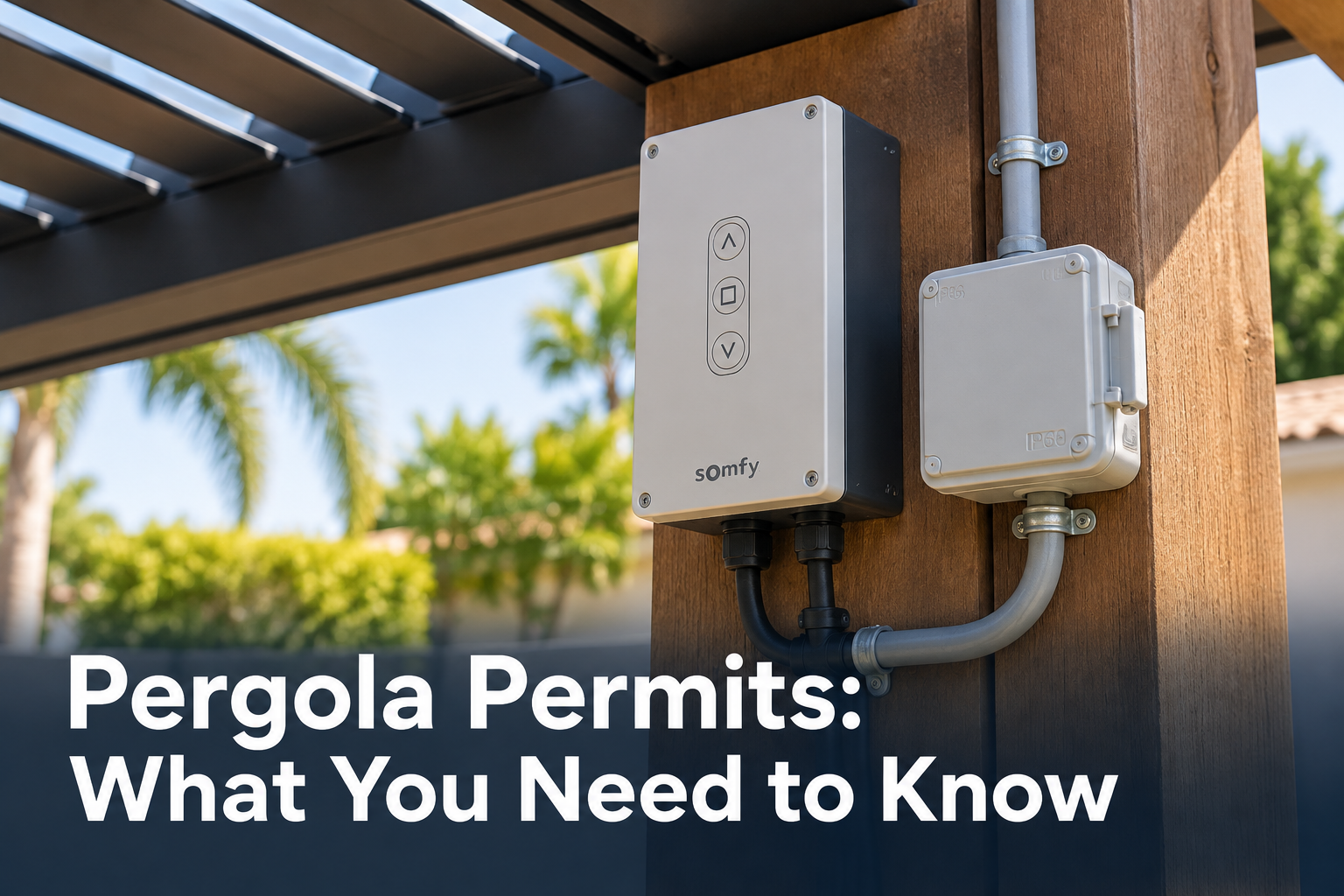
A Notice of Acceptance is a product approval document issued by Miami-Dade County certifying that a building product has been independently tested and approved for South Florida's extreme wind conditions. Many Broward County municipalities accept NOA-certified products as primary evidence of wind compliance, which simplifies the permitting process significantly.
An NOA is not the only path to code compliance. Some pergola systems use a licensed structural engineer to provide a site-specific engineering stamp in lieu of a product NOA. Both are valid approaches, but the NOA is widely considered the gold standard for permanent outdoor structures in South Florida because it reflects actual product testing rather than engineering calculations alone.
If a contractor cannot provide either an NOA or a PE-stamped engineering package specific to your site, that system should not go up on your property.
What Happens to a Pergola That Is Not Engineered for Florida's Wind Zone?
A pergola system without proper wind load engineering may fail structurally in a major hurricane, and structural failure in a high-wind event typically means the system becomes airborne debris. Beyond the risk to the home and neighboring properties, there is a direct insurance and liability issue.
An unpermitted structure that sustains hurricane damage is often excluded from homeowner's insurance coverage. If that structure damages a neighbor's property or vehicle during a storm, the liability falls on the homeowner. Permitting is not a bureaucratic formality. It is the documentation that protects you financially and legally when a storm does arrive.
Quick Questions
Can a louvered pergola actually survive a Category 4 or 5 hurricane in Florida?
An aluminum louvered pergola system engineered and installed to Florida Building Code wind load requirements for Broward County can withstand the design wind speeds required for our hurricane exposure zone. The key is verified documentation, either a valid NOA or a PE-stamped engineering package for your site. Systems without this documentation carry real structural and legal risk.
What is a Notice of Acceptance and does my pergola need one?
A Notice of Acceptance is a Miami-Dade County product approval confirming a building product passed testing for South Florida's extreme wind conditions. Many Broward municipalities require it for permanent pergola structures. Always ask for the NOA documentation, along with the specific wind speed it was tested to, before signing a contract.
Does an unpermitted pergola create problems after a hurricane?
Yes. An unpermitted structure that sustains storm damage may not be covered by your homeowner's insurance, and you may face additional liability if the structure causes damage to neighboring property. Pulling the permit is how you protect the investment and protect yourself.
"Every pergola system we install in South Florida has either a valid NOA or a site-specific engineering stamp because anything less is not something I'm willing to put my name on in this wind zone."
— Matt Patella, The Time Is Now Design & Build
Ready to Talk About a Wind-Rated Pergola for Your Property?
Before any design conversation, the structural question has to be answered correctly. At The Time Is Now Design & Build, every pergola installation we take on in Davie, Fort Lauderdale, Weston, and across Broward County is backed by proper engineering documentation and full permit management from start to finish.
The complete guide to custom louvered pergolas in South Florida covers design options, cost expectations, and the full permitting process in detail.
When you're ready to move forward, hurricane-rated pergola installation in Davie and Fort Lauderdale is one conversation away. We are licensed, insured, and we handle every permit so you don't have to.
Schedule your free pergola consultation and get a wind-rated design built for the way South Florida weather actually behaves.