TL;DR
- Custom louvered pergolas in Davie and Broward County are built from powder-coated aluminum, require a building permit in most municipalities, and should carry a wind load rating appropriate for South Florida's hurricane exposure.
- Professional installation typically runs $15,000–$45,000+ depending on size, features, and integration with existing outdoor spaces.
- Not all pergola systems sold in Florida meet local wind code requirements. Verifying engineering documentation before you buy protects your investment and your home's resale value.
Homeowners across Davie, Weston, and Fort Lauderdale are spending more time outdoors than ever, and the pergola market reflects that. But South Florida is not a forgiving environment for outdoor structures. Between year-round humidity, salt air, and a hurricane season that runs six months a year, the decisions you make before installation matter as much as the design itself.
A
custom louvered pergola gives you something a standard shade structure cannot: full control over your outdoor environment. Open the louvers for a breeze on a cool December morning. Close them when the afternoon sun hits or when a summer storm rolls in. For homeowners who want to use their outdoor space twelve months a year, that flexibility changes how the space actually functions. This guide covers what you need to know about materials, wind ratings, permits, cost, and the build process before you commit to a design.
What Is a Louvered Pergola and How Is It Different from a Standard Pergola?
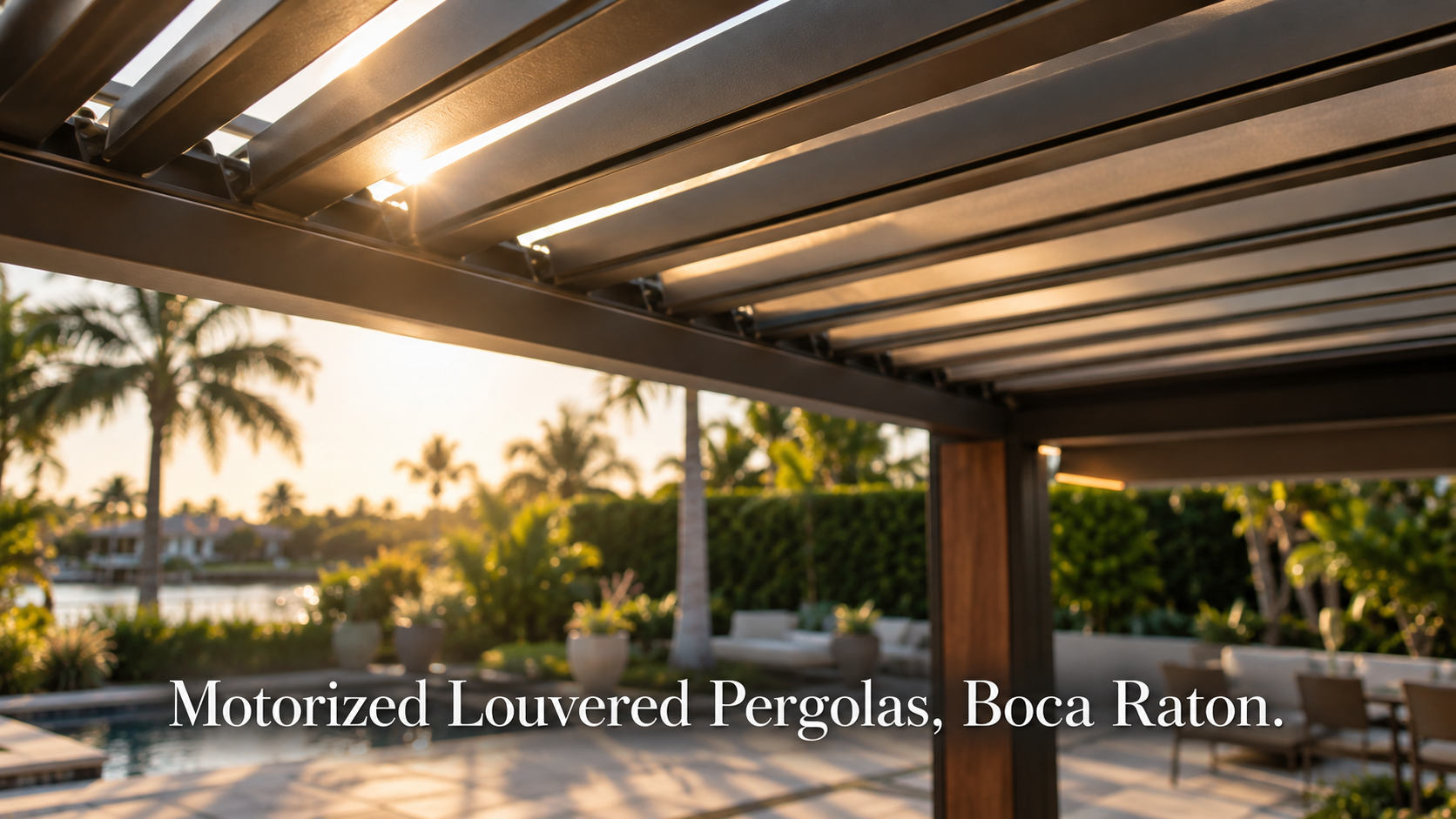
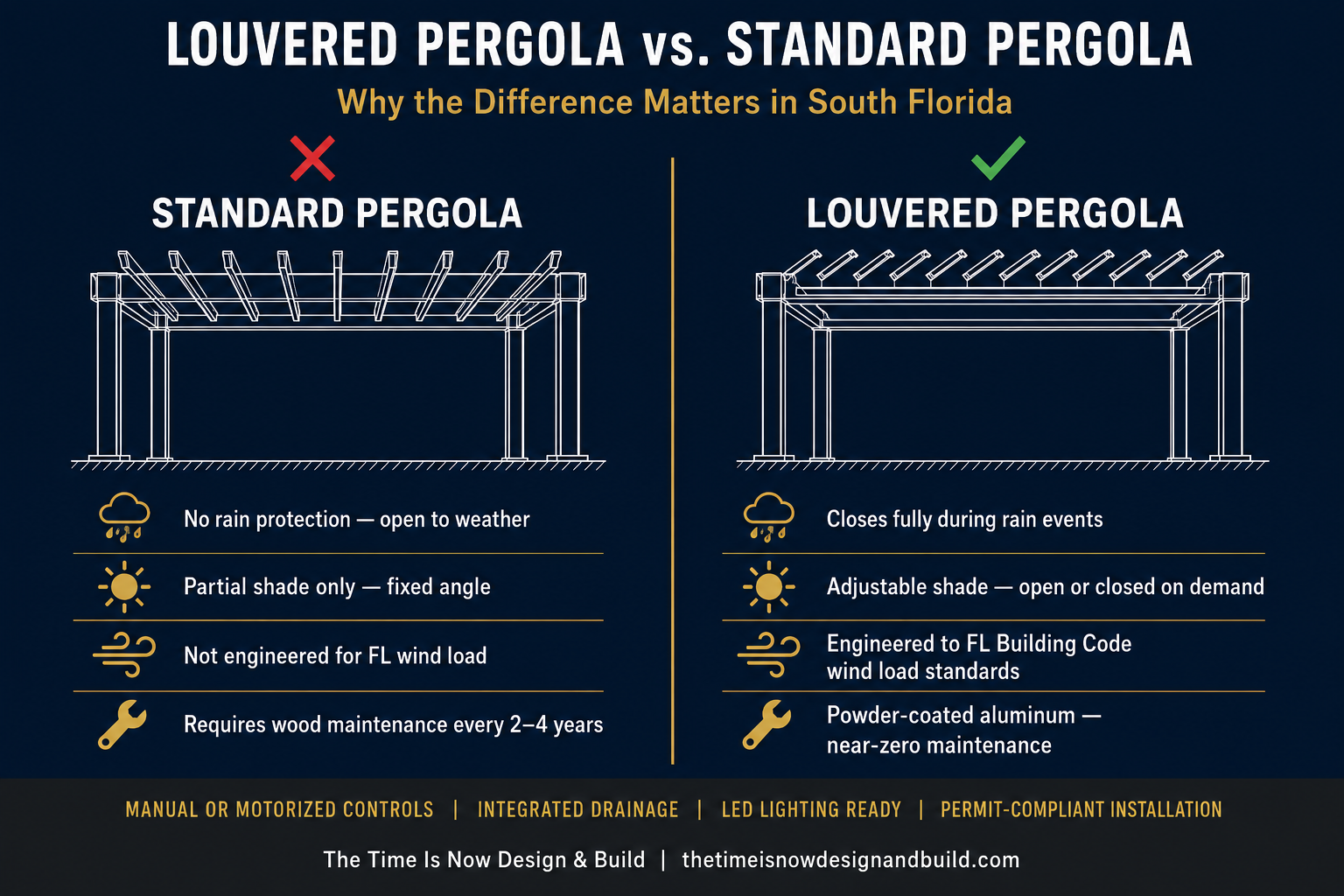
A louvered pergola features adjustable horizontal slats that can be opened or closed to control shade, airflow, and rain coverage. Unlike a fixed lattice pergola, a louvered system lets you fully close the roof during a rain event or intense midday sun, which is a defining feature for South Florida's climate.
A fixed lattice or open-beam pergola provides partial shade, full exposure to rain, and zero ability to adapt. That works in drier climates. In Broward County, where afternoon thunderstorms arrive fast and the sun is direct year-round, an adjustable louvered system is the version that actually gets used.
Fixed vs. Adjustable Louver Systems
Fixed louver systems are set at a permanent angle for shade and light diffusion but cannot be repositioned. They cost less than adjustable systems but offer none of the flexibility. For South Florida homeowners, fixed systems rarely justify the tradeoff. Adjustable louvers, whether manual or motorized, allow real-time control that makes the space usable in conditions that would otherwise drive you inside.
Motorized vs. Manual Louver Controls
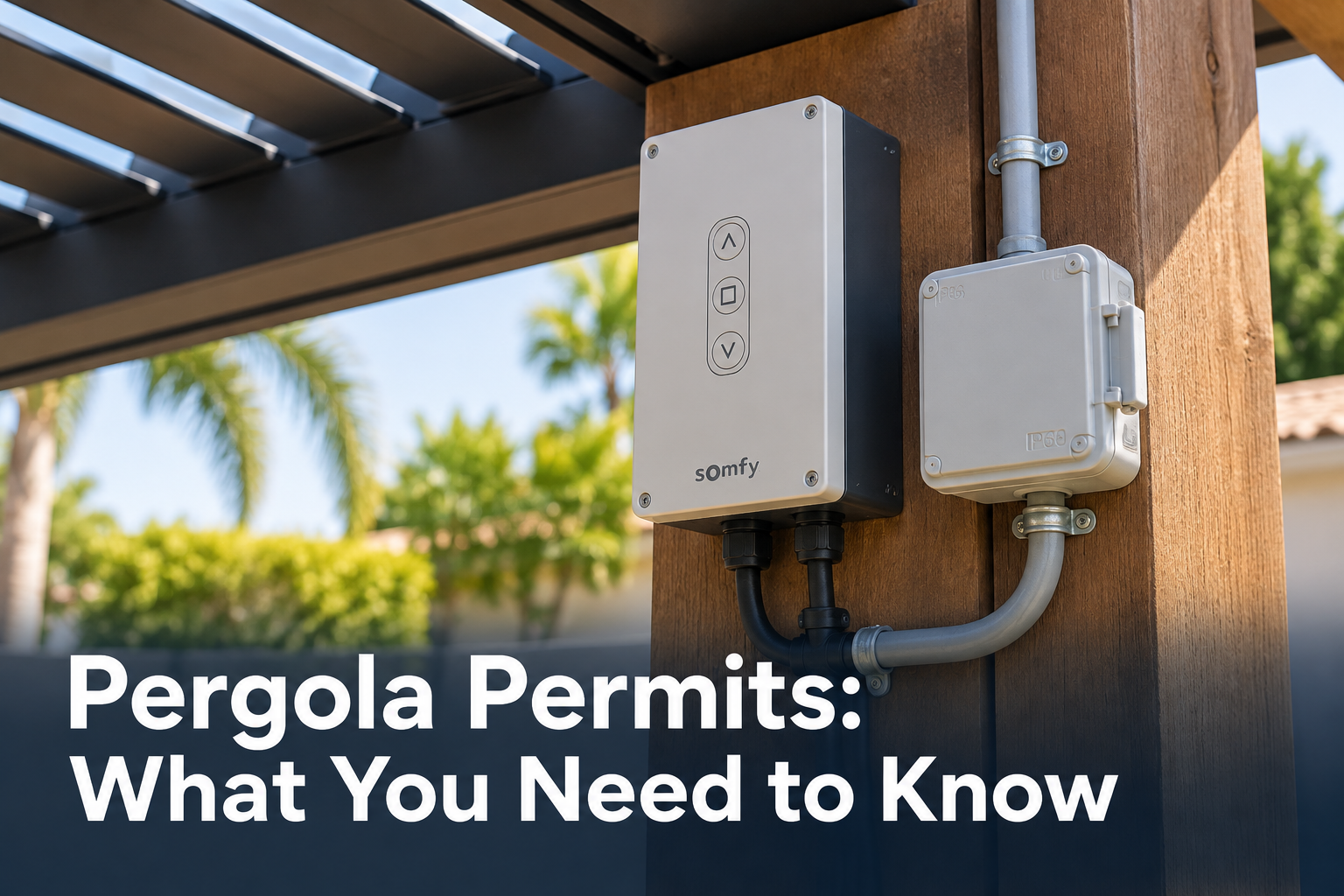
Motorized systems open and close with a remote or app, often integrating with smart home platforms. Manual systems use a hand crank or pull rod. Both are reliable. The decision usually comes down to convenience and budget. Motorized systems add $2,000–$6,000 to the project cost depending on the system, but for large pergolas or homeowners who want seamless operation, the upgrade is worth it.
What Materials Are Best for Pergolas in South Florida's Climate?
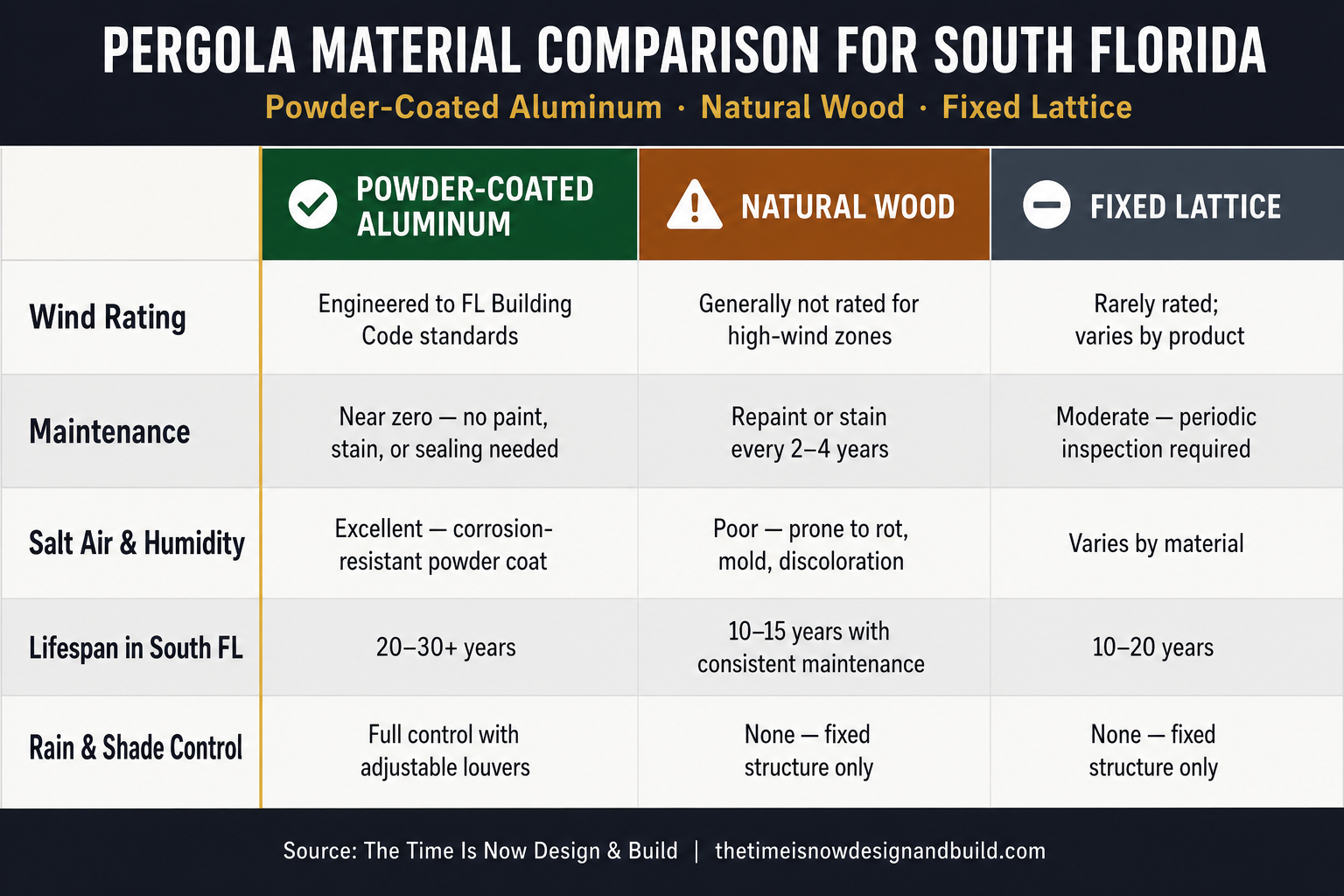
Powder-coated aluminum is the dominant material for South Florida pergola construction. It does not rot, warp, corrode, or require repainting, and engineered aluminum systems can be designed to meet Broward County's wind load requirements.
Wood pergolas look appealing in design magazines. In Davie and coastal Fort Lauderdale, they require constant maintenance. Salt air accelerates deterioration, high humidity promotes mold and rot, and wood structures generally cannot be engineered to the wind load ratings Florida requires for permitted outdoor structures.
Why Aluminum Outperforms Wood in South Florida
Aluminum extrusion profiles used in quality pergola systems are structural, not decorative. They are engineered to specific load requirements, and the connection points between posts, beams, and louver frames are designed to transfer wind loads rather than resist them with brute mass. That engineering approach is what allows an aluminum pergola to carry a wind rating that a wood structure cannot match without significant bulk.
Lifespan matters here as well. A quality powder-coated aluminum pergola in South Florida should last 20–30 years with minimal maintenance. A wood pergola in the same environment requires repainting or restaining every 2–4 years and structural assessment after any significant storm.
Powder Coat Finishes: Color, Durability, and Salt Air Resistance
Powder coating creates a thicker, harder finish than liquid paint and bonds to the aluminum through electrostatic application and heat curing. In salt air environments, it outperforms liquid-applied finishes significantly. Quality pergola manufacturers offer dozens of color options, including finishes that closely replicate natural wood grain for homeowners who want the aesthetic without the maintenance.
Do Louvered Pergolas Hold Up in Florida Hurricanes?
Engineered aluminum louvered pergola systems can be designed to meet Florida Building Code wind load requirements, including Miami-Dade and Broward County standards. The critical factor is whether the system carries a valid Notice of Acceptance (NOA) or engineering stamp for your specific wind zone. Many pergola systems sold in Florida do not meet this standard.
Understanding Wind Load Ratings and Florida Building Code
Broward County sits in a high-velocity hurricane zone. The Florida Building Code requires permitted outdoor structures to meet specific wind load thresholds that vary by location, height, and exposure category. An NOA is the product-level documentation that confirms a system has been tested and approved for a specific wind speed. An engineering stamp means a licensed structural engineer has reviewed the specific installation and certified that the structure as built meets code. For a deeper look at how these ratings work in practice, read our guide on whether louvered pergolas hold up in Florida hurricanes.
Both have a place in the permitting process, and your contractor should be able to explain which applies to your project.
Questions to Ask About Hurricane Compliance Before You Buy
Ask every contractor and product representative for a copy of the NOA or the engineering documentation before you sign anything. Ask specifically whether the product is rated for your municipality's wind exposure category. Ask whether the permit they pull is a structural permit or a simple improvement permit. A proper structural permit with engineering documentation protects your insurance coverage and your resale position. A quick-permit workaround does not.
Does a Pergola Require a Building Permit in Davie or Broward County?
Yes. In virtually all Broward County municipalities, a permanent pergola structure attached to or adjacent to a home requires a building permit. This covers foundation and footing work, the structure itself, and any electrical integration for lighting or fans.
Homeowners sometimes try to build without permits to save time. The risk is real. Unpermitted structures must be disclosed at resale, and buyers' lenders and insurers routinely flag them. In some cases, you may be required to tear down and rebuild to get a certificate of compliance before closing. A licensed contractor who pulls and manages all permits as part of the installation scope is not an optional upgrade. It is the correct way to do the project.
How Much Does a Custom Louvered Pergola Cost in South Florida?
Custom louvered pergola installation in Broward County typically runs $15,000–$45,000+ depending on size, louver system type (manual vs. motorized), integrated features such as lighting, fans, and drainage, and attachment complexity. Freestanding pergolas at lower square footages sit at the lower end. Large attached structures with full electrical integration are at the higher end.
What Drives Pergola Cost in South Florida
The biggest cost variables are footprint size, the louver system specification, motorization, and site conditions. A pergola over a ground-level patio is simpler to foot and frame than one cantilevered over an existing pool deck or elevated surface. Integrated drainage channels, which route rain off the closed louver system and through the posts, add both functionality and cost. LED lighting packages built into the perimeter frame are another common addition that affects the project total.
What a Full Custom Installation Includes
A complete custom pergola project includes the initial design consultation, site measurement, product selection and customization, permit application and management, footing and foundation work, structure assembly, feature integration (lighting, fans, drainage), and final inspection. When a single in-house team manages every phase of that scope, scheduling is tighter and accountability is clear.
How Does the Custom Pergola Design and Build Process Work?
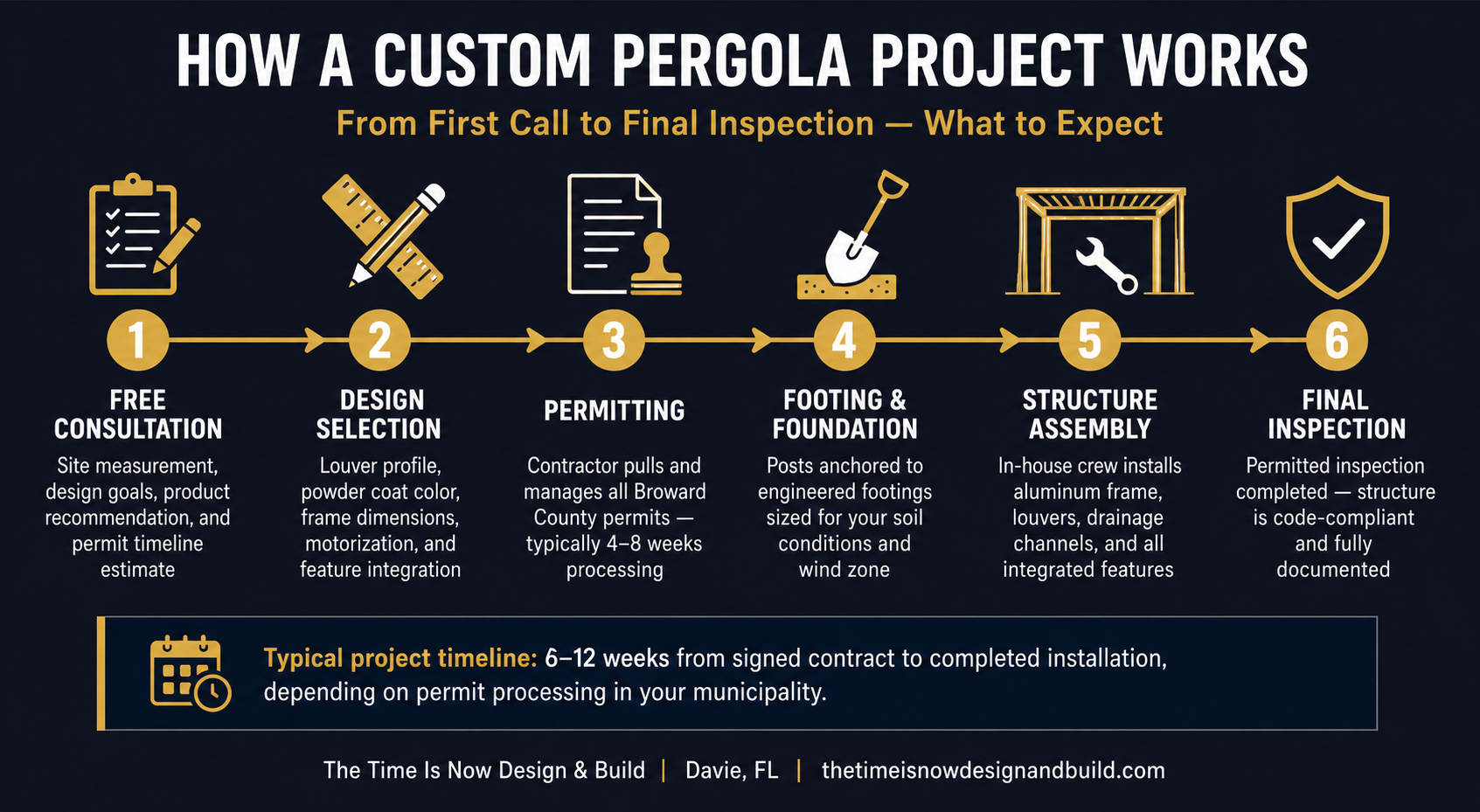
The process moves from initial consultation and site measurement through design selection, permitting, footing installation, structure assembly, and feature integration. With a single in-house team managing every phase, the timeline from signed contract to completed installation typically runs 6–12 weeks depending on permit processing time in your municipality.
The consultation phase is where site-specific decisions get made: attachment method, footing depth, structural approach for your soil conditions, and which louver system fits your use patterns and budget. Design selection follows, covering louver profile, color, frame dimensions, and feature integration. Permitting in Broward County typically takes 4–8 weeks depending on the municipality and workload. Once permits are approved, footing work and structure assembly typically complete within 1–2 weeks for most residential projects.
Frequently Asked Questions About Custom Louvered Pergolas
How much does a custom louvered pergola cost in Davie, FL?
Custom louvered pergola installation in Davie and Broward County typically costs $15,000–$45,000+, depending on size, louver system type, motorization, integrated lighting or fans, and structural complexity. Freestanding systems at modest sizes start lower; large attached structures with full integration run higher. A free on-site consultation gives you an accurate range for your specific project.
Do louvered pergolas hold up in Category 4 or 5 Florida hurricanes?
Engineered aluminum louvered pergola systems can be designed to meet Florida Building Code wind load requirements for Broward County's wind zone. The factor that matters is whether the system has a valid NOA or engineering stamp for your specific wind exposure. Many pergola products sold in Florida are not code-compliant. Always verify documentation before purchasing.
Does a pergola require a permit in Broward County?
Yes. Any permanent pergola structure in Broward County requires a building permit, including footing work and any electrical integration. Homeowners with unpermitted structures face disclosure obligations and potential complications at resale. A licensed contractor manages the permitting process as part of the installation scope.
What is the best pergola material for South Florida's humidity and salt air?
Powder-coated aluminum is the right material for South Florida pergolas. It does not rot, warp, corrode, or require repainting, and engineered aluminum systems can meet Broward County's wind load requirements. Wood requires ongoing maintenance in South Florida's climate and is generally not the right choice for coastal or high-humidity environments.
Matt Patella's Perspective
"The first question I ask every homeowner who calls about a pergola is whether they've seen a copy of the system's Notice of Acceptance for Broward County's wind zone. Most haven't, and many of the pergola systems being sold and installed in South Florida aren't actually rated for our wind exposure. An unpermitted, non-rated structure is a safety concern, a liability issue, and a resale problem. We only install systems with the right engineering documentation, and we pull every permits ourselves."
- Matt Patella, The Time Is Now Design & Build, 11 years in South Florida outdoor structure construction
Ready to Start Your Pergola Project in Davie or Broward County?
Permit processing in Broward County runs 4–8 weeks on average. The sooner you schedule a design consultation, the sooner you can realistically have a completed structure. Homeowners who wait until spring to call are often looking at late summer timelines.
At The Time Is Now Design & Build, every pergola project starts with a free design consultation that includes site measurement, product recommendation, and a permit timeline estimate specific to your municipality. We serve Davie, Weston, Southwest Ranches, Fort Lauderdale, Parkland, and surrounding Broward County communities.
Our team has 11 years of South Florida outdoor structure experience. We are licensed and insured, we install hurricane-rated systems only, we manage every permit ourselves, and our design and build team is fully in-house from first measurement to final inspection.
custom pergola installation in Davie and Broward County starts with a conversation. Call us or use the form on our site to schedule your free consultation.
For homeowners thinking about the bigger picture of their outdoor space, see
how pergolas integrate with patio and outdoor living design, or explore what's possible with
luxury pergola builders in Fort Lauderdale.