If you live in Broward or Palm Beach County, artificial turf can be a fantastic upgrade. Less maintenance, lower water use, and a consistently clean, green lawn year‑round.
But we’ve also seen firsthand how the wrong turf choices can lead to disappointment: fading, drainage issues, odors, heat problems, and turf that just doesn’t feel right underfoot.
Most of these issues don’t come from turf being “bad.” They come from choosing the wrong materials or cutting corners on installation for South Florida’s unique climate.
Here are the most common mistakes we see homeowners make and how to avoid them.
Mistake #1: Choosing Turf Based on Price Alone
It’s completely natural to compare turf options by price. The problem is that in South Florida, the cheapest turf almost always becomes the most expensive turf long‑term.
Lower‑cost systems often use:
- Heavier polypropylene content
- Minimal UV stabilization
- Thinner backing layers
That combination usually leads to:
- Faster fading
- Brittleness under sun exposure
- Shorter overall lifespan
Better approach:
Focus on value, not just price. Look for polyethylene‑based or blended fibers with strong UV protection and a backing system designed for heavy rain and humidity.
Mistake #2: Ignoring UV Stabilization (The #1 Turf Killer in Florida)
Florida sun is brutal on plastics.
Even high‑quality polyethylene turf can fade or weaken prematurely if it isn’t properly UV‑stabilized during manufacturing.
What we see locally:
Turf that looks great for the first 12–24 months, then starts to:
- Lose color
- Feel brittle
- Lay flat and stop bouncing back
Better approach:
Always prioritize turf with strong UV inhibitors and color pigments designed for high‑UV environments.
Mistake #3: Choosing the Wrong Fiber Type for How the Yard Is Used
Not all turf fibers perform the same way.
For example:
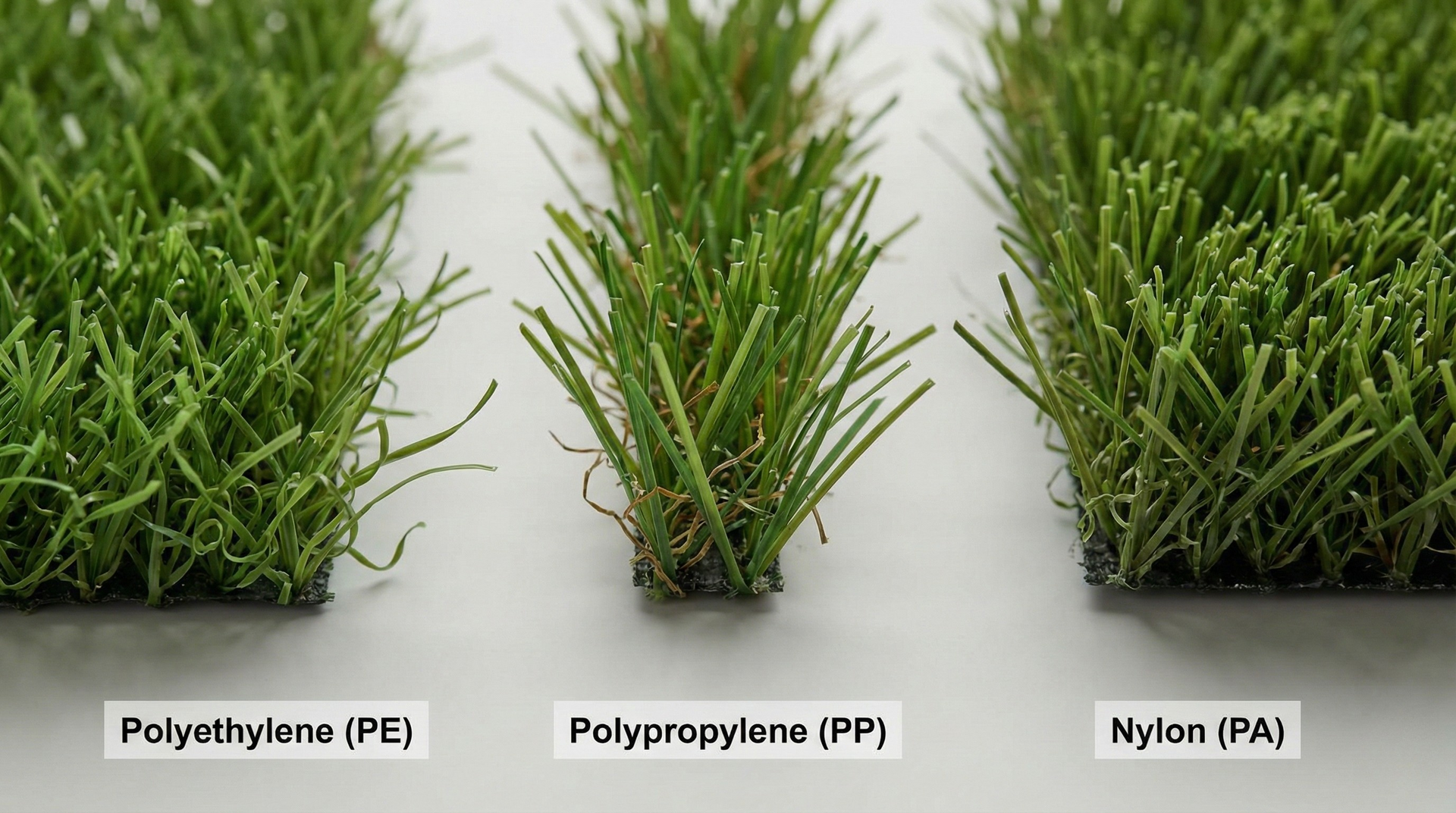
- Polyethylene = soft, natural feel
- Nylon = strongest and most resilient
- Polypropylene = stiffer, more budget‑oriented
We’ve seen:
- High‑traffic yards installed with soft decorative turf
- Putting greens built with fibers meant for landscaping
Better approach:
Match the fiber system to how the space will actually be used.
If you’re not sure which fibers work best here, we break it down in detail in our guide to what artificial grass fibers are made of and which materials perform best in South Florida.
Mistake #4: Overlooking Drainage and Base Preparation
In South Florida, drainage is everything.
We regularly see turf failures caused not by the turf itself — but by:
- Poorly compacted bases
- Inadequate drainage layers
- No slope planning
The result?
- Standing water after storms
- Musty odors
- Turf shifting or wrinkling
Better approach:
Your turf system should be designed from the ground up for heavy rain and humidity, not just appearance.
You can learn what proper preparation actually looks like on our artificial turf installation page.
Mistake #5: Choosing Dark or Dense Turf That Traps Heat
All artificial turf gets warmer than natural grass in direct sun.
But some turf designs make this much worse:
- Very dark green fibers
- Extremely dense pile height
- Stiff fiber shapes
What homeowners notice:
"It looks great, but it’s too hot to walk on barefoot."
Better approach:
Choose:
- Lighter color blends
- Softer polyethylene fibers
- Moderate pile density
These tend to stay more comfortable in
Fort Lauderdale,
Boca Raton, and surrounding areas.
Mistake #6: Skipping the Thatch Layer
That curly “dead grass” layer at the base of turf isn’t just cosmetic.
It:
- Helps blades stand upright
- Improves realism
- Speeds up drying after rain
Many low‑cost turfs either skip it or make it too thin.
Better approach:
Look for turf systems with a properly designed polypropylene thatch layer.

Mistake #7: Not Thinking About Pets and Odors
Dog owners in South Florida run into issues when turf isn’t designed for pet use.
Common problems:
- Poor drainage
- Odor buildup
- Staining
Better approach:
Use turf with:
- High drainage capacity
- Antimicrobial backing (when available)
- Proper infill and base prep
Mistake #8: Assuming All Turf Installs Are the Same
This one surprises people.
Two yards can use the same turf product and perform completely differently depending on:
- Base prep quality
- Drainage design
- Seam work
- Edge finishing
Better approach:
Installation quality matters just as much as turf quality.
That’s also why total project cost varies and why long‑term value matters more than the cheapest bid. We explain this more on our artificial turf cost savings page.
A Quick Reality Check for Broward & Palm Beach County Homeowners
Most turf problems we fix could have been avoided with:
- Better material selection
- Proper UV protection
- Drainage‑focused installation
South Florida is not the place to cut corners on outdoor materials.
Thinking About Artificial Turf for Your Yard?
If you’re in Broward or Palm Beach County and want to avoid these common mistakes, we’re always happy to answer questions about:
- Fiber materials
- Drainage
- Heat management
- Pet‑friendly turf
No pressure. No sales pitch. Just honest guidance based on real local installs.
Final Takeaway
Artificial turf can be an excellent long‑term upgrade for South Florida homes, when it’s done right.
The key is choosing:
- The right fiber materials
- Proper UV protection
- A drainage‑focused base
- An installation method designed for Florida’s climate
Avoiding these common mistakes can mean the difference between a lawn you love for 15 years and one you regret after 18 months.
Frequently Asked Questions About Artificial Turf in South Florida
What is the biggest mistake homeowners make when choosing artificial turf?
The most common mistake is choosing turf based on price alone instead of UV protection, fiber quality, and proper drainage design for South Florida’s climate.
What type of artificial turf is best for South Florida?
Most residential lawns in South Florida perform best with polyethylene‑based or blended turf systems that include strong UV stabilization and a drainage‑focused backing.
Does artificial turf fade in Florida sun?
High‑quality turf made with UV stabilizers resists fading. Lower‑quality turf without proper UV protection often fades and becomes brittle much faster in Florida’s sun.
Why does artificial turf smell with dogs?
Odors usually come from poor drainage, improper base prep, or turf systems not designed for pet use. Proper installation and high‑drainage turf prevent most odor issues.
Does artificial turf need drainage in South Florida?
Yes. Drainage is critical in South Florida due to heavy rain and humidity. Without a properly designed base and drainage layer, turf can hold water, grow odor, and shift over time.
Is artificial turf worth it in South Florida?
When properly installed with UV‑stabilized fibers and good drainage, artificial turf can last 10–15 years or more and significantly reduce water and maintenance costs.