TL;DR: Many HOAs in Davie and Southwest Ranches still restrict new Ficus hedge plantings because of ongoing whitefly problems, though most communities allow existing hedges to stay in place. Homeowners planning a new privacy hedge should confirm the current rules with their HOA before choosing Ficus.
Ficus hedges used to be the default choice for privacy screening in South Florida yards, but the question of whether Ficus hedges are banned in Davie still comes up regularly among homeowners in Davie and Southwest Ranches. The whitefly outbreak that hit South Florida over a decade ago left thousands of Ficus hedges damaged beyond saving, and HOAs across the region tightened their landscaping rules in response. Some of those restrictions remain in place today, and the specifics vary from community to community.
Why Are Ficus Hedges Restricted in the First Place?
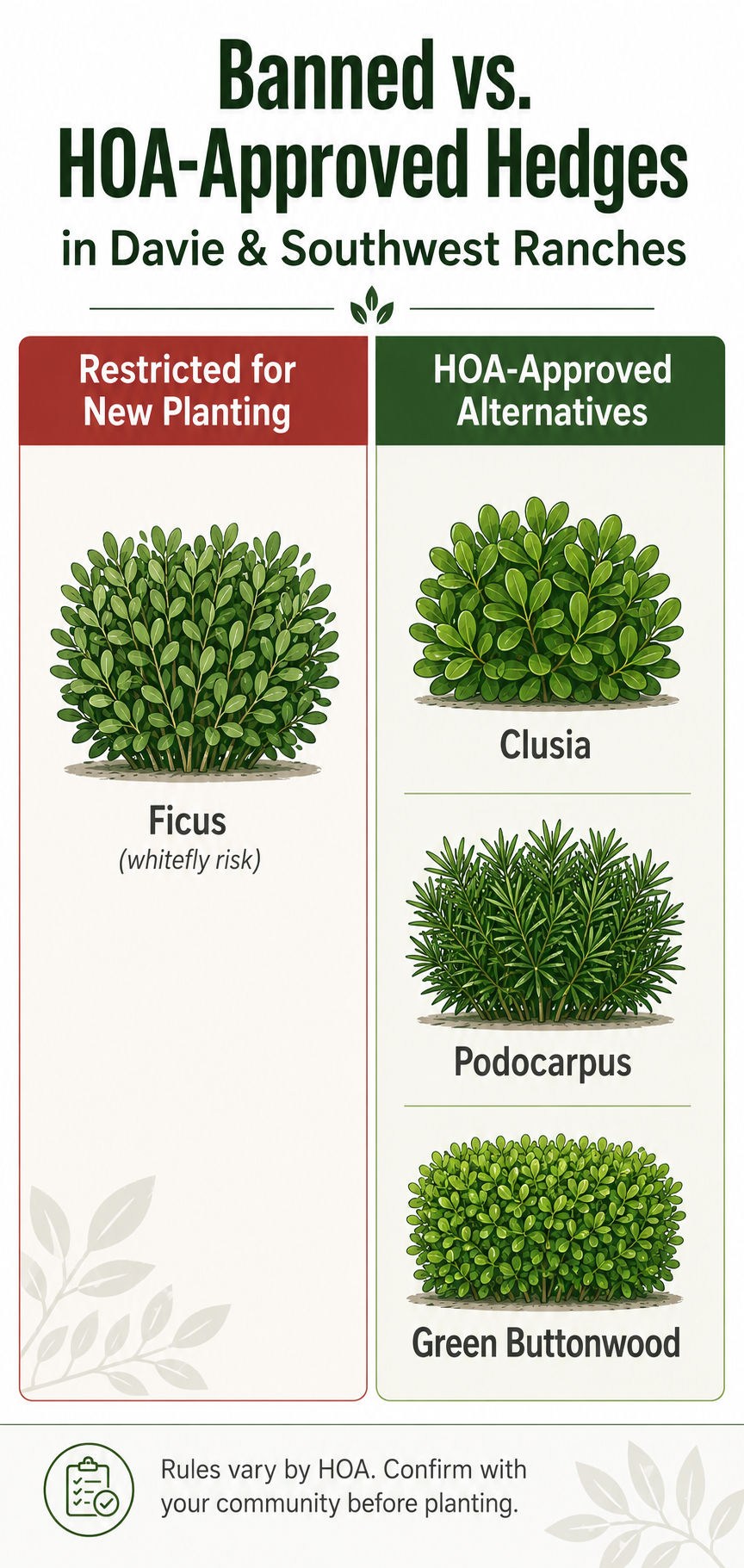
Ficus hedges are highly vulnerable to whitefly infestations that spread quickly between neighboring yards, and that vulnerability is the main reason many HOAs in Davie and Southwest Ranches restrict new plantings.
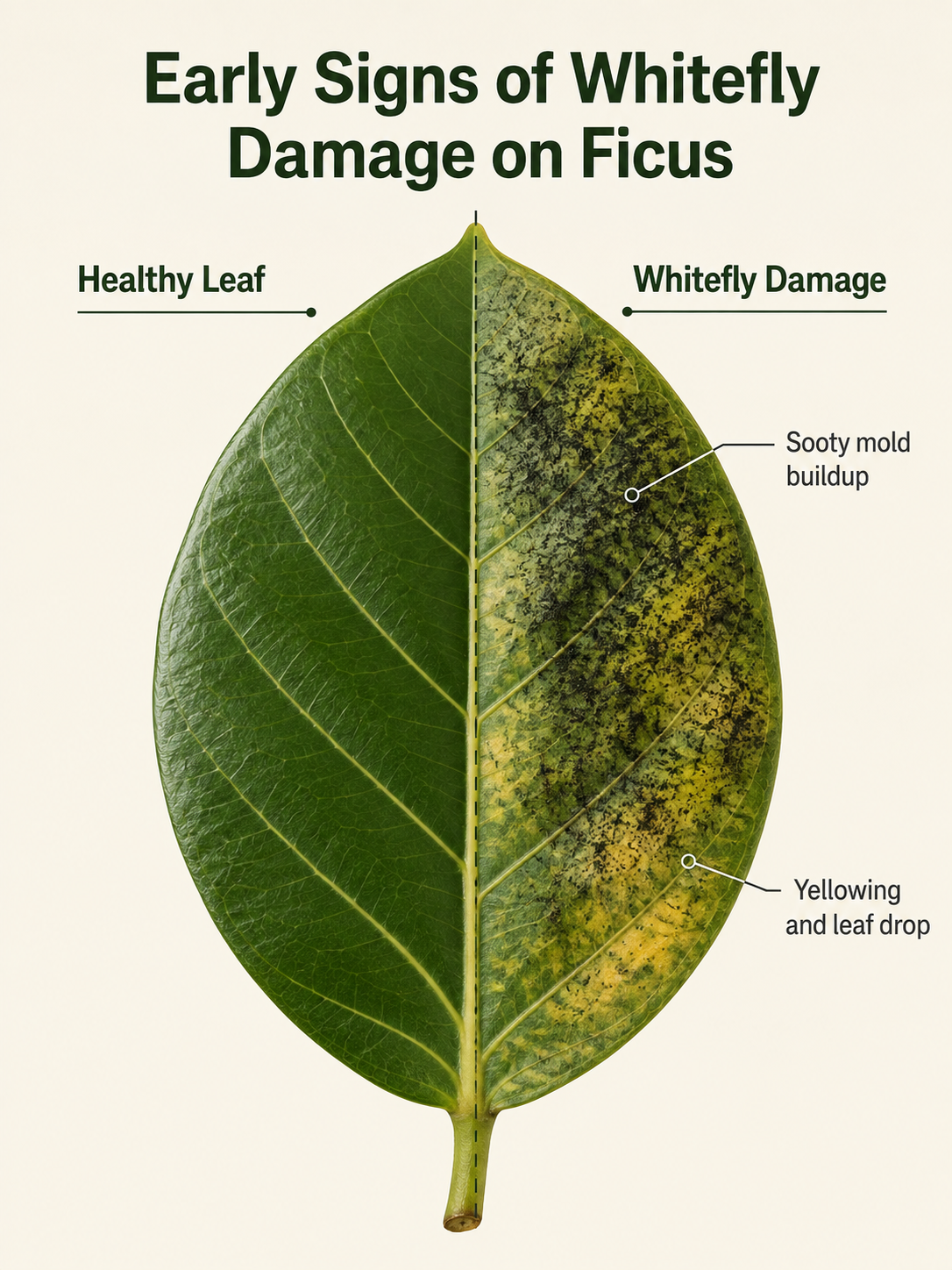
The Ficus whitefly arrived in South Florida in 2007 and moved through the region fast, feeding on Ficus foliage and leaving behind a sticky residue that grows into black sooty mold. Once one hedge in a neighborhood gets infected, the pest tends to move down the property line, which is exactly why HOAs got involved. A homeowner who treats their own hedge can still watch it get reinfected from a neighbor's yard. That shared risk is what pushed many HOA boards in Davie and Southwest Ranches to write Ficus restrictions into their landscaping guidelines rather than leave it to individual homeowners to manage. Rules differ by community. Some HOAs ban new Ficus plantings outright while allowing existing hedges to remain, and others require a replacement plan any time a Ficus hedge dies or gets removed.
What Should You Plant Instead?
Clusia, Podocarpus, and Green Buttonwood are common HOA-approved alternatives that offer privacy screening comparable to Ficus without the same pest vulnerability.
Clusia is usually the closest match for homeowners who liked how fast and dense Ficus grew. It has thick, glossy leaves, holds up well in Florida heat, and doesn't attract whitefly the way Ficus does. Podocarpus grows more slowly but has a tighter, more formal look that some HOA design guidelines prefer. Green Buttonwood works well for homeowners who want a hedge that can also handle wind and salt exposure, which makes it a strong option for properties closer to the coast. Our full guide on which hedge species are still HOA-approved breaks down how each of these performs by lot size, sun exposure, and HOA design standard, which matters since not every approved species fits every yard.
Quick Questions
Can I keep an existing Ficus hedge, or does it need to be removed?
Most HOAs grandfather in existing Ficus hedges and only restrict new plantings or full replacements. Homeowners should still confirm the current policy with their specific HOA, since rules can change year to year.
What's the best Ficus alternative for a fast-growing privacy hedge?
Clusia is the most common substitute. It offers growth speed and density close to Ficus without the whitefly susceptibility that led to the original restrictions.
Checking HOA rules before planting a hedge saves homeowners from an expensive redo a year or two later, says Matt Patella, who has spent 11 years installing landscaping across Broward County with The Time Is Now Design and Build.
Ready to Plant a Hedge That Won't Trigger an HOA Violation?
Before any hedge goes in the ground, it helps to have someone confirm the species is approved and matched to the site. Our in-house planting crew handles that step for every project, so homeowners aren't guessing at what their HOA will sign off on. Book your free landscape consultation and we'll walk the property, review the HOA guidelines, and recommend a hedge that holds up for years, not just the first season.
The short answer to whether Ficus hedges are banned in Davie is that many HOAs still restrict new plantings, but a well-chosen alternative can deliver the same privacy without the ongoing pest risk.